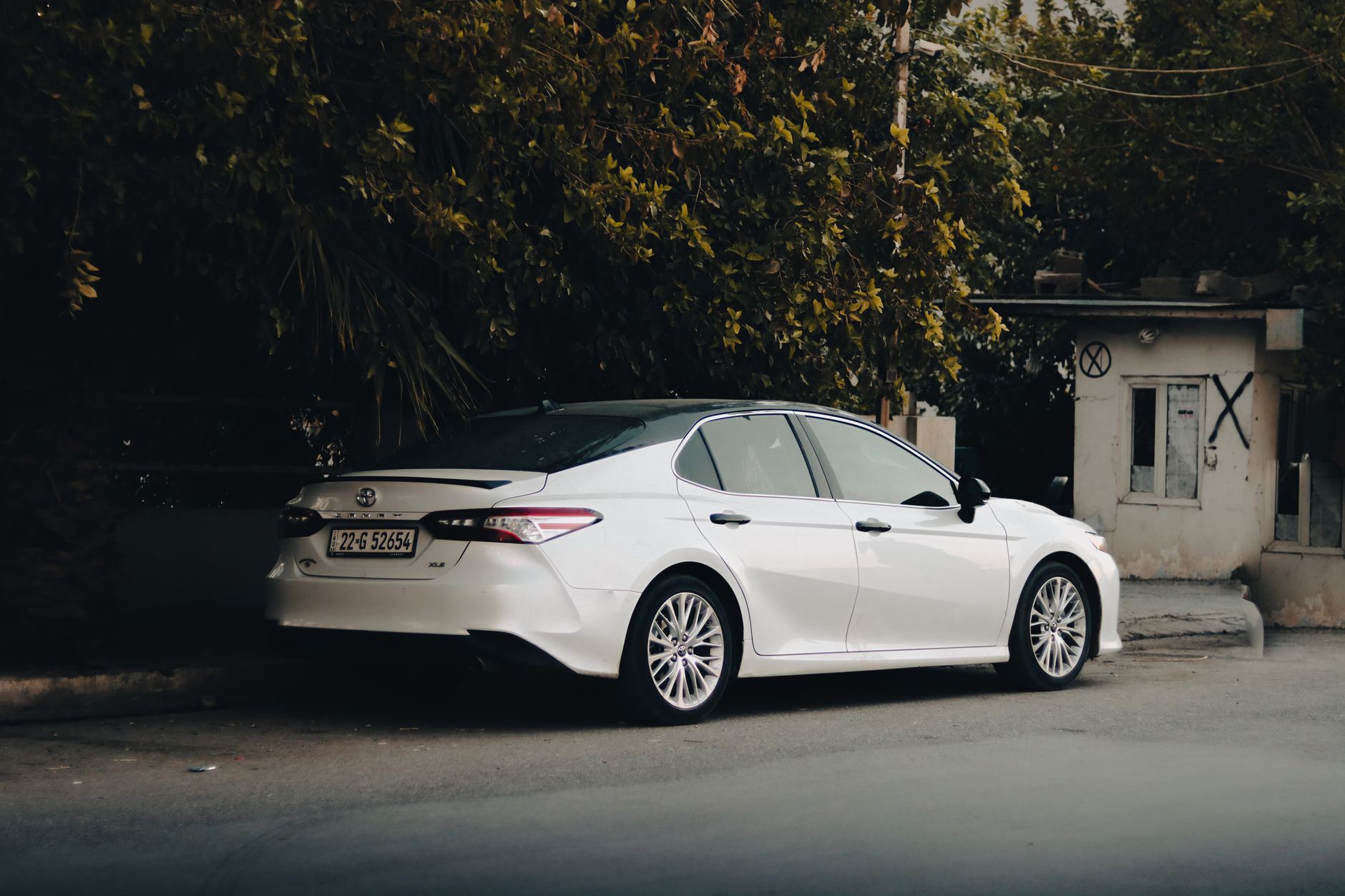
Photo: MercurySable99 / CC BY-SA 4.0 / Wikimedia Commons

Hyundai Sonata
Sedan · LPG · 70 versions · owner report
Ranked #3 of 6 midsize cars on owner data, price and fuel economy
Every generation
Power
Combined, EPA 2027
What owners say
Our take, from owner reports
Sentiment is sharply divided by generation and powertrain, creating a high-risk, high-reward ownership profile.
7 problems reported (1 very frequent, 3 recurrent, 3 isolated) · high confidence
Problems owners report
- Very frequentCatastrophic engine failure (Theta II engines, 2.0L, 2.4L)
Engines "grenade" or "blow" with little to no warning, often between 80,000-120,000 miles. Requires complete replacement.
- RecurrentExcessive oil consumption
Engines "guzzle oil," particularly in models from around 2015, leading to potential engine damage if not monitored closely.
- RecurrentPoor dealership service experience
Lengthy repair times (e.g., months in shop), multiple visits for the same issue, and difficulty getting problems properly diagnosed.
+ 4 more issuesShow fewer
- RecurrentHigh insurance costs
Premiums noted to be "inflated" compared to competitors.
- IsolatedTransmission failure
Complete transmission replacement reported around 87,000-95,000 miles on some 2017-2018 models.
- IsolatedPremature interior rattles and brake noises
Unusual noises developing within the first 6 months of ownership on new models.
- IsolatedShort-term depreciation
Noted to be significantly higher than for Toyota or Honda equivalents.
The version owners recommend
For the current generation, the Sonata Hybrid Limited trim is frequently highlighted. Owners cite its comprehensive feature set, including a 360-degree camera, cooled seats, advanced highway driving assist (HDA), and a quiet, refined ride. The Sonata N-Line is recommended for driving enthusiasts seeking performance (nearly 300 hp) and a sportier interior, though it sacrifices some comfort and advanced driver aids available in the Limited trim. For non-hybrid models, higher trims (Limited, Ultimate) are preferred for their technology packages.
Competitors to consider
Owners compare it most often with the Toyota Camry, Honda Accord, Kia K5, Hyundai Tucson and Kia Sorento.
Is the Sonata right for you?
Get an answer for your year, mileage and budget.
Full owner reportHide full owner report
Overall sentiment
Sentiment is sharply divided by generation and powertrain, creating a high-risk, high-reward ownership profile. For models from approximately 2011-2019 equipped with the Theta II engine (particularly 2.0L and 2.4L variants), sentiment is overwhelmingly negative due to catastrophic, well-documented engine failures often occurring between 80,000 and 120,000 miles, leading to significant downtime, repair hassles, and loss of confidence. For the current generation (2020+), particularly hybrid models and those with newer "Smartstream" engines, sentiment shifts to positive, with owners praising superior value, advanced technology, quiet and comfortable highway ride, intuitive infotainment, and generous warranty coverage. The vehicle is consistently noted for offering more features, a more premium-feeling interior, and better technology than direct competitors like the Toyota Camry and Honda Accord, but this is counterbalanced by persistent concerns over long-term reliability and higher insurance costs.
Positioning vs competitors
Positioned as a high-value, tech-forward alternative to the Toyota Camry and Honda Accord. Owners consistently report the Sonata offers more standard features, a more premium and comfortable interior, superior infotainment usability, and a quieter cabin at a comparable or slightly lower price point. The hybrid variant is noted for its smooth, quiet ride and advanced highway driving assists. However, it is universally acknowledged that the Camry and Accord hold significant advantages in long-term reliability, resale value, and lower insurance premiums. The Kia K5 is seen as a direct sibling competitor. The Sonata is also compared to luxury sedans like the Genesis G80 for comfort but is understood to be a mainstream offering.
Recommended configurations
Hybrid powertrain is strongly recommended for its fuel efficiency, smoothness, and refined driving experience. The Limited trim is favored for maximizing comfort and technology features. For those considering older generations (pre-2020), extreme caution is advised, and a pre-purchase inspection is considered mandatory. For any Sonata, maintaining meticulous service records, particularly for oil changes every 3,000-5,000 miles for turbo models, is emphasized as critical. Verifying active factory warranties or recalls (especially for Theta II engines) is essential for used models.
General recommendations
Recommended for buyers who prioritize cutting-edge technology, interior comfort, and feature content over absolute long-term reliability and who plan to utilize the full 5-year/60,000-mile bumper-to-bumper and 10-year/100,000-mile powertrain warranties. Suitable for highway commuters who value a quiet cabin and advanced driver assistance systems. NOT recommended for those who plan to keep a vehicle beyond 100,000 miles without tolerance for major powertrain repairs, even if covered under warranty. NOT recommended without verifying insurance costs, which are frequently reported as inflated. For used purchases, target 2020+ models to avoid the most problematic engines; avoid 2011-2019 models with Theta II engines unless a lifetime warranty extension is confirmed and all service records are impeccable.
Remarks
Owner experience is almost entirely defined by the powertrain generation. The Theta II engine issues (2011-2019) have resulted in a widespread loss of trust, numerous warranty-covered replacements, and a reputation for unreliability that heavily impacts perceptions of even newer models. The manufacturer's warranty, while a strong selling point, is frequently invoked, indicating a high failure rate. For the current generation (2020+), the narrative shifts to one of strong value and satisfaction, particularly with hybrid and high-trim models, though the specter of past reliability problems remains a dominant concern in owner discussions. Analysis based on approximately 35 substantive owner discussions spanning multiple model years.
Generation by generation
Owner insights per generation and US complaint/recall records (NHTSA).
Complaints and recalls by model yearWorst year: 2011. Years to avoid: 2017, 2016, 2015, 2014, 2012, 2011, 2006Source: NHTSA (US)Show table
Each year graded against the model's other years: Year Score. See all Hyundai Sonata years to avoid
| Year | Complaints | Recalls | Most-reported area |
|---|---|---|---|
| 2026 | 6 | 1 | unknown or other |
| 2025 | 27 | 0 | unknown or other |
| 2024 | 55 | 1 | electrical system |
| 2023 | 102 | 2 | fuel/propulsion system |
| 2022 | 112 | 3 | electrical system |
| 2021 | 197 | 4 | engine |
| 2020 | 194 | 4 | electrical system |
| 2019 | 170 | 0 | engine |
| 2018 | 382 | 1 | engine |
| 2017 | 876 | 4 | engine |
| 2016 | 1,013 | 8 | engine |
| 2015 | 1,197 | 12 | engine |
| 2014 | 775 | 8 | engine |
| 2012 | 1,710 | 11 | engine |
Complaint counts come from owner reports filed with the US National Highway Traffic Safety Administration. Higher-selling years naturally accumulate more complaints.
Recall notices133 on record · Source: NHTSA (US)Show recalls
2026 · electrical system: instrument cluster/panelcampaign 26V047000
Hyundai Motor America (Hyundai) is recalling certain 2025-2026 Tucson Hybrid, Tucson Plug-In Hybrid Electric (PHEV), 2026 IONIQ 5, Santa Cruz, Kona, Palisade, Palisade Hybrid, Santa Fe, Santa Fe Hybrid, Sonata, Sonata Hybrid, and Tucson vehicles. Due to a software error, the instrument panel display may fail. As such, these vehicles fail to comply with the requirements of Federal Motor Vehicle Safety Standard (FMVSS) number 101, "Controls and Displays."
2024 · exterior lighting:brake lightscampaign 24V583000
Hyundai Motor America (Hyundai) is recalling certain 2024 Hyundai Sonata vehicles. The software for the brake lights may cause the brake lights to flash and not illuminate properly. As such, these vehicles fail to comply with the requirements of Federal Motor Vehicle Safety Standard (FMVSS) number 108, "Lamps, Reflective Devices, and Associated Equipment."
2023 · power train:automatic transmission:fluid/lubricant:pumpcampaign 23V526000
Hyundai Motor America (Hyundai) is recalling certain 2023-2024 Palisade Tucson, 2023 Sonata, Elantra, and Kona vehicles. The electronic controller for the Idle Stop & Go oil pump assembly may contain damaged electrical components that can cause the pump controller to overheat.
2023 · fuel system, gasolinecampaign 25V796000
Hyundai Motor America (Hyundai) is recalling certain 2020-2023 Sonata vehicles. A damaged check valve can allow air to enter the fuel tank, causing it to expand and contact hot exhaust components, melting the tank.
2022 · fuel system, gasoline:delivery:hoses, lines/piping, and fittingscampaign 21V524000
Hyundai Motor America (Hyundai) is recalling certain 2021-2022 Santa Fe and Sonata vehicles equipped with 2.5L turbocharged engines. Fuel may leak at the pipe connection between the high-pressure fuel pump and fuel rail.
2022 · power train:automatic transmissioncampaign 22V746000
Hyundai Motor Company (Hyundai) is recalling certain 2021-2022 Santa Fe, Sonata, Veloster N, 2022 Santa Cruz, Elantra N, and Kona N vehicles. The vehicle's "fail-safe" limited-mobility drive mode may be impaired, when prompted by a transmission oil pump malfunction, which can result in a complete loss of drive power.
2022 · fuel system, gasolinecampaign 25V796000
Hyundai Motor America (Hyundai) is recalling certain 2020-2023 Sonata vehicles. A damaged check valve can allow air to enter the fuel tank, causing it to expand and contact hot exhaust components, melting the tank.
2021 · fuel system, gasoline:delivery:hoses, lines/piping, and fittingscampaign 21V524000
Hyundai Motor America (Hyundai) is recalling certain 2021-2022 Santa Fe and Sonata vehicles equipped with 2.5L turbocharged engines. Fuel may leak at the pipe connection between the high-pressure fuel pump and fuel rail.
2021 · visibility:windshieldcampaign 21V00M000
Hyundai Motor America (Hyundai) is recalling certain 2020-2021 Santa Fe, 2021 Sonata, and Elantra vehicles. During manufacturing, the windshield may not have been properly bonded to the vehicle, allowing it to detach in a crash.
2021 · power train:automatic transmissioncampaign 22V746000
Hyundai Motor Company (Hyundai) is recalling certain 2021-2022 Santa Fe, Sonata, Veloster N, 2022 Santa Cruz, Elantra N, and Kona N vehicles. The vehicle's "fail-safe" limited-mobility drive mode may be impaired, when prompted by a transmission oil pump malfunction, which can result in a complete loss of drive power.
2021 · fuel system, gasolinecampaign 25V796000
Hyundai Motor America (Hyundai) is recalling certain 2020-2023 Sonata vehicles. A damaged check valve can allow air to enter the fuel tank, causing it to expand and contact hot exhaust components, melting the tank.
2020 · electrical system:softwarecampaign 20V213000
Hyundai Motor America (Hyundai) is recalling certain 2020 Nexo and Sonata vehicles. The Remote Smart Parking Assist (RSPA) software may fail to prevent vehicle movement upon detection of an RSPA system malfunction.
2020 · equipment:other:labelscampaign 20V122000
Hyundai Motor America (Hyundai) is recalling certain 2020 Sonata vehicles produced between October 22, 2019 and February 13, 2020. The tire pressure label inside the driver's door and the owner's manual state an incorrect tire size. As such, these vehicles fail to comply with the requirements of Federal Motor Vehicle Safety Standard (FMVSS) number 110, "Tire Selection and Rims."
2020 · latches/locks/linkages:trunk lid:latchcampaign 22V196000
Hyundai Motor America (Hyundai) is recalling certain 2020 Sonata and Sonata Hybrid, and 2019 Genesis G70 vehicles. The trunk latch may become damaged, preventing the opening of the trunk from the inside. As such, these vehicles fail to comply with the requirements of Federal Motor Vehicle Safety Standard number 401, "Internal Trunk Release."
2020 · fuel system, gasolinecampaign 25V796000
Hyundai Motor America (Hyundai) is recalling certain 2020-2023 Sonata vehicles. A damaged check valve can allow air to enter the fuel tank, causing it to expand and contact hot exhaust components, melting the tank.
118 older recalls not shown. Check nhtsa.gov with your VIN for the full history.
Specifications
Enthusiast code: DN8
L2.0 LPG
2.0L 4-cylinder · 146 hp · FWD · automatic
Built 2023–2026