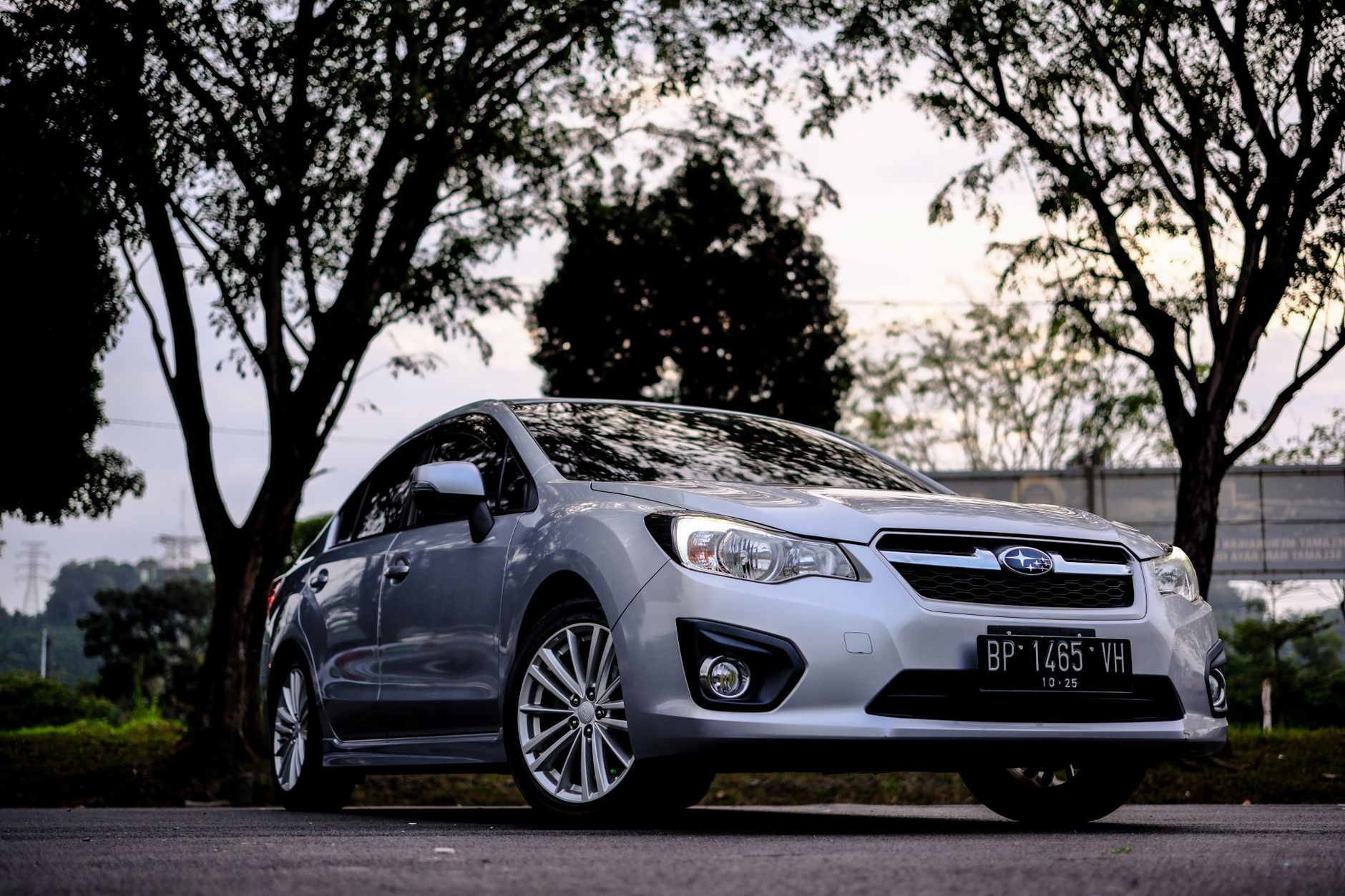
Photo: Wikimedia Commons (CC)
Subaru Legacy
Sedan · Gas · 63 versions · owner report
Ranked #10 of 11 used midsize cars on owner data, price and fuel economy
Every generation
Power
0–62 mph (0–100 km/h)
Top speed (245 km/h)
Combined, EPA 2025
What owners say
Our take, from owner reports
Mixed sentiment with a strong generational divide.
6 problems reported (2 very frequent, 3 recurrent, 1 isolated) · medium confidence
Problems owners report
- Very frequentPoor fuel economy
Described as significantly worse than EPA estimates and segment competitors, affecting all models.
- Very frequentCVT transmission reliability concerns
Early failures, especially in models from approximately 2014-2015; jerky behavior when cold; requires diligent fluid service.
- RecurrentInfotainment system problems
Laggy, unresponsive touchscreen (particularly in models with large screens); system crashes; screen delamination in 2015-2019 models.
+ 3 more issuesShow fewer
- RecurrentEngine issues (varies by generation)
Head gasket failures on older models (pre-2010); oil pan leaks on newer turbo models; isolated catastrophic engine failures.
- RecurrentExcessive corrosion/rust
Severe rust on rear wheel arches, strut towers, and sills on older models, especially in regions using road salt.
- IsolatedElectrical/battery problems
Multiple premature battery failures, sometimes linked to firmware-related power drain issues requiring dealer updates.
The version owners recommend
3.6R models (equipped with the 3.6L flat-six engine) are most frequently recommended by knowledgeable owners. The 3.6R engine is praised for its smooth power delivery and perceived robustness compared to the standard 2.5L four-cylinder, which is often described as underpowered. For older generations (2003-2009), the 3.0R Spec B with a manual transmission is highlighted as a particularly desirable and durable "unicorn." For newer CVT-equipped models, the 3.6R is noted to use a slightly stronger CVT variant than the 2.5i models.
Competitors to consider
Owners compare it most often with the Toyota Camry, Honda Accord, Mazda6, Mazda3 and Acura TLX.
Is the Legacy right for you?
Get an answer for your year, mileage and budget.
Full owner reportHide full owner report
Overall sentiment
Mixed sentiment with a strong generational divide. Long-term owner reports for older generations (pre-2010) frequently praise the 3.0R and 3.6R flat-six engines for smoothness and potential longevity, with some examples cited as reaching over 200,000 and even 300,000 miles with proper maintenance. The all-wheel-drive system is consistently highlighted as a key strength, providing excellent capability in snow and adverse conditions. However, significant and very frequent criticisms are directed at poor fuel economy across all models, described as "horrendous" and "thirsty," with real-world figures often below EPA estimates. For newer generations (approximately 2015 onward), feedback is more polarized. Positive experiences cite good daily driving comfort, strong safety ratings, and trouble-free ownership into high mileage. Negative experiences for these newer models focus on the CVT transmission's reliability concerns (especially in early implementations around 2014-2015), various electronic and infotainment glitches, and isolated but serious engine failures. The vehicle is generally seen as a competent, safe, and practical sedan whose ownership satisfaction is heavily dependent on specific model year, engine choice, and maintenance history.
Positioning vs competitors
Positioned as a practical, safety-focused AWD sedan, often compared directly to the Toyota Camry and Honda Accord. Owner discussions frequently note the Legacy's standard AWD as a key advantage over those front-wheel-drive competitors, particularly for buyers in snowy climates. However, the Camry and Accord are consistently cited as having superior fuel economy, better hybrid options, and a stronger reputation for long-term reliability with lower maintenance costs. The Mazda6 is mentioned as a more engaging and stylish alternative. Within the Subaru lineup, the Legacy is compared to the Outback (viewed as a lifted wagon version) and Impreza (smaller, more efficient). The consensus is that the Legacy offers a compelling value proposition primarily for buyers who prioritize all-weather capability over ultimate efficiency or perceived reliability.
Recommended configurations
AWD is considered the defining and essential feature. For used models, a comprehensive pre-purchase inspection (PPI) by a Subaru-knowledgeable mechanic is very strongly recommended to check for rust (on older models), CVT health, and engine condition. For models with the 3.6L engine, verifying that spark plug changes were performed at the recommended 60,000-mile interval is advised due to the high labor cost. For CVT-equipped models, confirming a history of regular CVT fluid changes (every 30,000-60,000 miles) is frequently mentioned as critical. An extended warranty is suggested by some owners for peace of mind, particularly concerning the CVT.
General recommendations
Suitable for drivers in regions with significant snow or rain who prioritize all-weather security and safety features in a sedan. Recommended for buyers willing to prioritize capability over fuel efficiency. NOT recommended for buyers whose primary concerns are low running costs or maximum fuel economy. Essential to research specific model year issues, particularly for CVT reliability in early 2010s models and infotainment problems in mid-2010s models. A thorough PPI is non-negotiable for used purchases. For newer turbocharged (XT) models, some owner reports indicate a higher incidence of oil leaks and transmission concerns, making non-turbo models a more cautious choice for some.
Remarks
Owner feedback is highly generation-specific. The reputation for head gasket failures is repeatedly noted as primarily affecting pre-2010 models with specific engines (e.g., EJ25), with later models moving to different engine designs. The discontinuation of the Legacy after the 2025 model year is noted in discussions. The 3.6L H6 engine is widely regarded in the owner community as a more reliable and desirable powerplant compared to the base 2.5L four-cylinder. Analysis based on owner discussions spanning models from approximately 2003 to 2025.
Generation by generation
Owner insights per generation and US complaint/recall records (NHTSA).
Legacy VI2014–2019718 complaints · 24 recallshigh confidenceRead report
Most-reported areas (NHTSA): electrical system (204) · visibility/wiper (160) · unknown or other (145)
Our take, from owner reports
Owners generally view the 6th generation Legacy as a solid, comfortable, and capable daily driver, particularly praising the 3.6R engine and AWD capability.
14 problems reported (3 very frequent, 4 recurrent, 7 isolated) · high confidence
Problems owners report
- Very frequentCVT transmission failure (2.5L models)
Multiple owners report complete transmission failure between 90,000-138,000 miles, with replacement costs ranging from $1,700 (used) to over $10,000 (new at dealer). Some owners report grinding noises for 18 months before failure.
- Very frequentCVT hesitation/lurching/shuddering
Owners report hesitation when coasting or from stops, often resolved or improved by fluid changes. Some cases progressed to transmission failure.
- Very frequent"Lifetime fluid" misinformation leading to transmission damage
Multiple owners report being told the CVT fluid never needs changing, only to experience issues; owners strongly recommend drain and fill every 30,000-40,000 miles.
+ 11 more issuesShow fewer
- RecurrentPoor paint quality
Owners describe paint as "junk," with chipping and clear-coat issues reported.
- RecurrentInfotainment screen delamination
Reported on 2019 models, with a known warranty extension (CP1) for Harman Gen3.1 units.
- RecurrentApple CarPlay connectivity issues
Owners report intermittent failures, sometimes traced to incorrect wiring or software bugs requiring updates.
- RecurrentWheel bearing failure
Multiple owners report front and rear wheel bearing failures before 100,000 miles.
- IsolatedOil consumption (2.5L)
One 3.6R owner reports a quart every 1,000 miles after 150,000 miles; the 2013 model year is noted as worse but that is a different generation.
- IsolatedHead gasket or cam carrier oil leaks
One owner reports a diagnosed head gasket leak at 93,000 miles; others suggest it is more likely cam carriers or timing cover, and a small external leak may not be urgent.
- IsolatedTPMS sensor battery failure
One owner reports sensors dying around 2019 model year, with the light degrading from showing pressure to no data.
- IsolatedBattery drain issues
One owner reports parasitic drain possibly related to amplifier or head unit, with a class-action settlement mentioned for battery issues.
- IsolatedActive grille shutter codes (P05A0/P05A1)
Reported on a 2015 model; owners say it is not serious, fixable with actuator replacement or calibration.
- IsolatedDoor hinge bolt corrosion
One owner reports weathered bolts falling out of the front driver door on a 2019 model.
- IsolatedDog-tracking after collision repair
One owner reports a 2017 model that dog-tracks badly after frame repair, with the car appearing twisted.
Is a 2014–2019 Legacy right for you?
Get an answer for your year, mileage and budget.
Legacy V2009–2014591 complaints · 85 recallshigh confidenceRead report
Most-reported areas (NHTSA): power train (149) · air bags (123) · engine (101)
Our take, from owner reports
Owners generally view the 5th generation Legacy as a solid, comfortable, and reliable daily driver that excels in snow and can reach high mileage with routine maintenance.
14 problems reported (1 very frequent, 5 recurrent, 8 isolated) · high confidence
Problems owners report
- Very frequentCVT transmission failure or torque converter issues (stalling, slipping, grinding noises, complete failure)
Multiple owners report failures between 124k-172k miles, with replacement costs ranging from $1,700 for used units to over $9,000 for new ones; the CVT is a sealed unit that cannot be rebuilt.
- Recurrent2013 2.5L oil consumption from new engine design
Owners describe the 2013 as "probably the worst year for oil burning issues" due to a brand-new engine with teething problems, fixed in 2014.
- RecurrentHead gasket failure on 2.5L models
Multiple owners report overheating and coolant loss traced to head gaskets, though owners note this generation has fewer issues than earlier EJ engines.
+ 11 more issuesShow fewer
- RecurrentWheel bearing wear
Multiple owners mention consuming wheel bearings, with one joking the car "should reliably consume 1-2 wheel bearing per year.".
- RecurrentCVT valve body or solenoid issues (P2763 code)
Owners report this code persisting after valve body replacement, requiring harness probing and resistance testing.
- RecurrentStalling at stoplights
Owners attribute this to torque converter clutch wear or failing torque converter.
- IsolatedTMIC plastic end tank failure (GT models)
One owner notes the plastic end tanks on the intercooler are known to fail.
- IsolatedRadiator failure
One owner reports radiator failure and replacement for around $100.
- IsolatedStock tune too lean, potentially burning valves (GT models)
One owner mentions this as a believed issue.
- IsolatedLED headlight bulb fitment issues
One owner reports the housing opening being too narrow for most LED bulbs, requiring front-end disassembly.
- IsolatedActive grille shutter codes (P05A0/P05A1)
Mentioned in one discussion about a 2015 model, not this generation.
- IsolatedElectrical gremlins causing multiple dash lights
One owner reports a loose ground connection causing dashboard warning lights.
- IsolatedPaint quality concerns
One owner describes Subaru paint as "junk" and recommends paint protection film.
- IsolatedSteering rack leaks
Mentioned once in the context of earlier generation models, not confirmed for this generation.
Is a 2009–2014 Legacy right for you?
Get an answer for your year, mileage and budget.
Legacy V Station2009–2014591 complaints · 85 recallshigh confidenceRead report
Most-reported areas (NHTSA): power train (149) · air bags (123) · engine (101)
Our take, from owner reports
Owners generally view this generation as a solid, comfortable, and reliable daily driver, with many reporting high mileage (200k+) without major issues.
11 problems reported (1 very frequent, 4 recurrent, 6 isolated) · high confidence
Problems owners report
- Very frequentCVT transmission failure (2010-2014, especially early years)
Multiple owners report failures between 102k-172k miles, with replacement costs ranging from $1,700 (used) to over $9,000 (new). One owner reported grinding noises for 18 months before failure. The CVT is a sealed unit that cannot be rebuilt.
- RecurrentTorque converter stalling/shudder issues (CVT models)
Owners report stalling at stoplights and torque converter clutch wear, with one suggesting shifting to neutral while braking to reduce strain.
- Recurrent2013 2.5L engine oil consumption
Described as "probably the worst year for oil burning issues" due to a new engine design with teething problems, fixed in 2014.
+ 8 more issuesShow fewer
- RecurrentHead gasket failure/overheating (2.5L)
Multiple owners report overheating traced to head gaskets, though this generation has fewer issues than earlier EJ engines. One owner reported coolant in oil from a damaged gasket.
- RecurrentWheel bearing wear
Multiple owners report consuming 1-2 wheel bearings per year, with one owner jokingly suggesting buying them in bulk.
- IsolatedTMIC plastic end tank failure (GT models)
One owner reports the stock intercooler end tanks are known to fail.
- IsolatedRadiator failure
One owner reports radiator failure, replaced cheaply with an aftermarket unit.
- IsolatedValve body electrical issues (CVT)
One owner reports persistent P2763 code requiring valve body replacement, with another noting a DIY replacement cost of $980 for the part.
- IsolatedElectrical gremlins causing multiple dash lights
One owner reports a loose ground connection causing intermittent Christmas-tree dashboard illumination.
- IsolatedLED headlight bulb fitment issues
One owner reports the housing opening being too narrow for most aftermarket LED bulbs, requiring housing disassembly.
- IsolatedP05A0/P05A1 active grille shutter codes
One owner reports these codes on a 2015 (not this generation), but the discussion was about a 2015 model and is not attributed here.
Is a 2009–2014 Legacy right for you?
Get an answer for your year, mileage and budget.
Legacy IV2003–2009545 complaints · 73 recallshigh confidenceRead report
Most-reported areas (NHTSA): air bags (144) · service brakes (70) · electrical system (60)
Our take, from owner reports
Owners are passionate about this generation, frequently calling it their favorite era of Subaru design and describing the Legacy GT as a "sleeper" and a joy to drive.
22 problems reported (3 very frequent, 8 recurrent, 11 isolated) · high confidence
Problems owners report
- Very frequentHead gasket failure on naturally aspirated 2.5L engines, especially pre-2005 models
- Very frequentTiming belt and water pump due by age or mileage (~105k miles / 170k km)
- Very frequentOil consumption, particularly on higher-mileage engines
+ 19 more issuesShow fewer
- RecurrentBanjo bolt oil filters clogging and starving the turbo of oil
- RecurrentCatted up-pipe breaking down and sending debris into the turbo (2005-2006)
- RecurrentTurbo failure around 150k miles
- RecurrentPlastic end tanks on the intercooler failing
- RecurrentPremature lower control arm bushing wear
- RecurrentSteering rack leaks
- RecurrentRust bubbling from fenders and undercarriage corrosion in salt-belt regions
- RecurrentRadiator failure
- IsolatedRear hatch wiring harness wear on wagons
- IsolatedWheel bearing consumption (reported on 2009 GT)
- IsolatedSticking EGR valve causing rough idle
- IsolatedDirty throttle body causing rough idle
- IsolatedValve cover gasket leaks
- IsolatedMass air flow sensor failure
- IsolatedClutch fork failure
- IsolatedRear strut failure
- IsolatedCV axle failure
- IsolatedWiper fluid line rot
- IsolatedSticky dashboard coating
Is a 2003–2009 Legacy right for you?
Get an answer for your year, mileage and budget.
Legacy IV Station2003–2009545 complaints · 73 recallshigh confidenceRead report
Most-reported areas (NHTSA): air bags (144) · service brakes (70) · electrical system (60)
Our take, from owner reports
Owners are passionate about this generation, frequently calling it their favorite era of Subaru design and praising the GT models as "sweet rides" and "sleepers." However, the consensus is clear: these are not low-cost vehicles to own.
17 problems reported (5 very frequent, 6 recurrent, 6 isolated) · high confidence
Problems owners report
- Very frequentHead gasket failure on naturally aspirated 2.5L engines
Owners consistently cite this as the primary concern, with replacement costs estimated at $1500-2000 and engines typically needing removal.
- Very frequentOil consumption on higher-mileage engines
Rings gumming up with carbon is cited as the main cause; one owner reported burning 1 quart per 1000 miles.
- Very frequentTiming belt and water pump needing replacement by age or mileage
Due at 105k miles or by age regardless of low mileage; failure is catastrophic.
+ 14 more issuesShow fewer
- Very frequentBanjo bolt oil filters clogging and starving the turbo
A well-known issue on 2005-2008 turbo models; removal is widely recommended.
- Very frequentCatted uppipe breaking down and sending debris into the turbo
Affects 2005-2006 models; Subaru removed the cat in 2007.
- RecurrentTurbo failure around 150k miles
Owners budget for replacement and often upgrade to a VF52.
- RecurrentIntercooler end tank separation
Plastic end tanks on the TMIC are known to fail.
- RecurrentLower control arm bushings wearing prematurely
Requires whole control arm replacement, roughly $300 each plus labor.
- RecurrentRear trailing arm bushings failing
Causes rear-end side-to-side movement over bumps and uneven tire wear.
- RecurrentSteering rack leaks
Multiple owners report needing replacement at around $1000.
- RecurrentRadiator failure
Plastic end tanks fail; replacement is relatively cheap.
- IsolatedRough idle from sticking EGR valve
One owner reported this as the fix.
- IsolatedValve cover gasket leaks causing oil on spark plugs
Mentioned as a thing to check.
- IsolatedRear hatch wiring harness wear on wagons
From opening and closing the hatch.
- IsolatedDrive-by-wire throttle issues causing idle problems
One owner with a 2007 GT reported idle problems traced to the electronic throttle system.
- IsolatedRust bubbling from fenders
Cited as an early cancer sign in this generation.
- IsolatedDashboard becoming sticky
One owner asked if this generation was affected.
Is a 2003–2009 Legacy right for you?
Get an answer for your year, mileage and budget.
Complaints and recalls by model yearWorst year: 2005. Years to avoid: 2011, 2010, 2005Source: NHTSA (US)Show table
Each year graded against the model's other years: Year Score. See all Subaru Legacy years to avoid
| Year | Complaints | Recalls | Most-reported area |
|---|---|---|---|
| 2025 | 6 | 0 | engine |
| 2024 | 17 | 0 | forward collision avoidance |
| 2023 | 10 | 2 | unknown or other |
| 2022 | 32 | 2 | visibility/wiper |
| 2021 | 31 | 3 | unknown or other |
| 2020 | 121 | 6 | visibility/wiper |
| 2019 | 123 | 3 | visibility/wiper |
| 2018 | 117 | 3 | electrical system |
| 2017 | 119 | 2 | visibility/wiper |
| 2016 | 147 | 3 | electrical system |
| 2015 | 159 | 3 | electrical system |
| 2014 | 53 | 10 | air bags |
| 2013 | 66 | 12 | engine |
| 2012 | 90 | 16 | power train |
Complaint counts come from owner reports filed with the US National Highway Traffic Safety Administration. Higher-selling years naturally accumulate more complaints.
Recall notices207 on record · Source: NHTSA (US)Show recalls
2023 · power train:driveline:driveshaftcampaign 23V647000
Subaru of America, Inc. (Subaru) is recalling certain 2023 Outback, Legacy, Ascent, and Impreza vehicles. The center support bolts for the driveshaft may loosen, resulting in the disconnection of the front end of the driveshaft.
2023 · power train:automatic transmission:park/neutral start interlock switchcampaign 23V755000
Subaru of America, Inc. is recalling certain model year 2021 Crosstrek, 2022 Forester, 2021-2023 Legacy, and Outback vehicles. An insufficient weld may allow water to enter the inhibitor switch, causing it to fail.
2022 · power train:automatic transmission:park/neutral start interlock switchcampaign 23V755000
Subaru of America, Inc. is recalling certain model year 2021 Crosstrek, 2022 Forester, 2021-2023 Legacy, and Outback vehicles. An insufficient weld may allow water to enter the inhibitor switch, causing it to fail.
2022 · air bags:sensor:occupant classification:front passengercampaign 24V227000
Subaru of America, Inc. (Subaru) is recalling certain 2020-2022 Outback and Legacy vehicles. A capacitor in the sensors for the Occupant Detection System (ODS) may crack and short circuit, which can prevent the front passenger air bag from deploying in a crash.
2021 · power train:automatic transmission:control module (tcm/pcm/tecm)campaign 22V485000
Subaru of America, Inc. (Subaru) is recalling certain 2020-2021 Outback and Legacy vehicles. A programming error in the Transmission Control Unit (TCU) may allow the clutch to engage before the drive chain is completely clamped.
2021 · power train:automatic transmission:park/neutral start interlock switchcampaign 23V755000
Subaru of America, Inc. is recalling certain model year 2021 Crosstrek, 2022 Forester, 2021-2023 Legacy, and Outback vehicles. An insufficient weld may allow water to enter the inhibitor switch, causing it to fail.
2021 · air bags:sensor:occupant classification:front passengercampaign 24V227000
Subaru of America, Inc. (Subaru) is recalling certain 2020-2022 Outback and Legacy vehicles. A capacitor in the sensors for the Occupant Detection System (ODS) may crack and short circuit, which can prevent the front passenger air bag from deploying in a crash.
2020 · back over prevention:display functioncampaign 20V766000
Subaru of America, Inc. (Subaru) is recalling certain 2020 Legacy and Outback vehicles equipped with "high" grade and "mid" grade multimedia navigation. The August 2020 over-the-air software update may have timed out without completing the installation, corrupting the data, and causing the rearview display to shutoff intermittently. As such, these vehicles fail to comply with the requirements of Federal Motor Vehicle Safety Standard number 111, "Rear Visibility."
2020 · power train:automatic transmission:control module (tcm/pcm/tecm)campaign 21V955000
Subaru of America, Inc. (Subaru) is recalling certain 2019-2020 Ascent, 2020 Legacy and Outback vehicles. A programming error in the Transmission Control Unit (TCU) may allow the clutch to engage before the drive chain is completely clamped.
2020 · fuel system, gasoline:delivery:fuel pumpcampaign 21V587000
Subaru of America, Inc. (Subaru) is recalling certain 2019-2020 Ascent, 2018 Forester, 2018-2020 Impreza, Legacy, Outback, 2018-2019 BRZ, WRX, and Toyota 86 vehicles. The low-pressure fuel pump inside the fuel tank may fail.
2020 · service brakes, hydraulic:pedals and linkagescampaign 19V664000
Subaru of America, Inc. (Subaru) is recalling certain 2020 Outback and Legacy vehicles. The brake pedal mounting bracket may have a missing or insufficiently tightened bolt.
2020 · power train:automatic transmission:control module (tcm/pcm/tecm)campaign 22V485000
Subaru of America, Inc. (Subaru) is recalling certain 2020-2021 Outback and Legacy vehicles. A programming error in the Transmission Control Unit (TCU) may allow the clutch to engage before the drive chain is completely clamped.
2020 · air bags:sensor:occupant classification:front passengercampaign 24V227000
Subaru of America, Inc. (Subaru) is recalling certain 2020-2022 Outback and Legacy vehicles. A capacitor in the sensors for the Occupant Detection System (ODS) may crack and short circuit, which can prevent the front passenger air bag from deploying in a crash.
2019 · fuel system, gasoline:delivery:fuel pumpcampaign 21V587000
Subaru of America, Inc. (Subaru) is recalling certain 2019-2020 Ascent, 2018 Forester, 2018-2020 Impreza, Legacy, Outback, 2018-2019 BRZ, WRX, and Toyota 86 vehicles. The low-pressure fuel pump inside the fuel tank may fail.
2019 · fuel system, gasoline:delivery:fuel pumpcampaign 20V218000
Subaru of America, Inc. (Subaru) is recalling certain 2019 Impreza, Outback, Legacy, and Ascent vehicles. The low pressure fuel pump may become inoperative.
192 older recalls not shown. Check nhtsa.gov with your VIN for the full history.
Specifications
2.5 Lineartronic
2.5L 4-cylinder · 182 hp · AWD · automatic (CVT)
Built 2022–2026