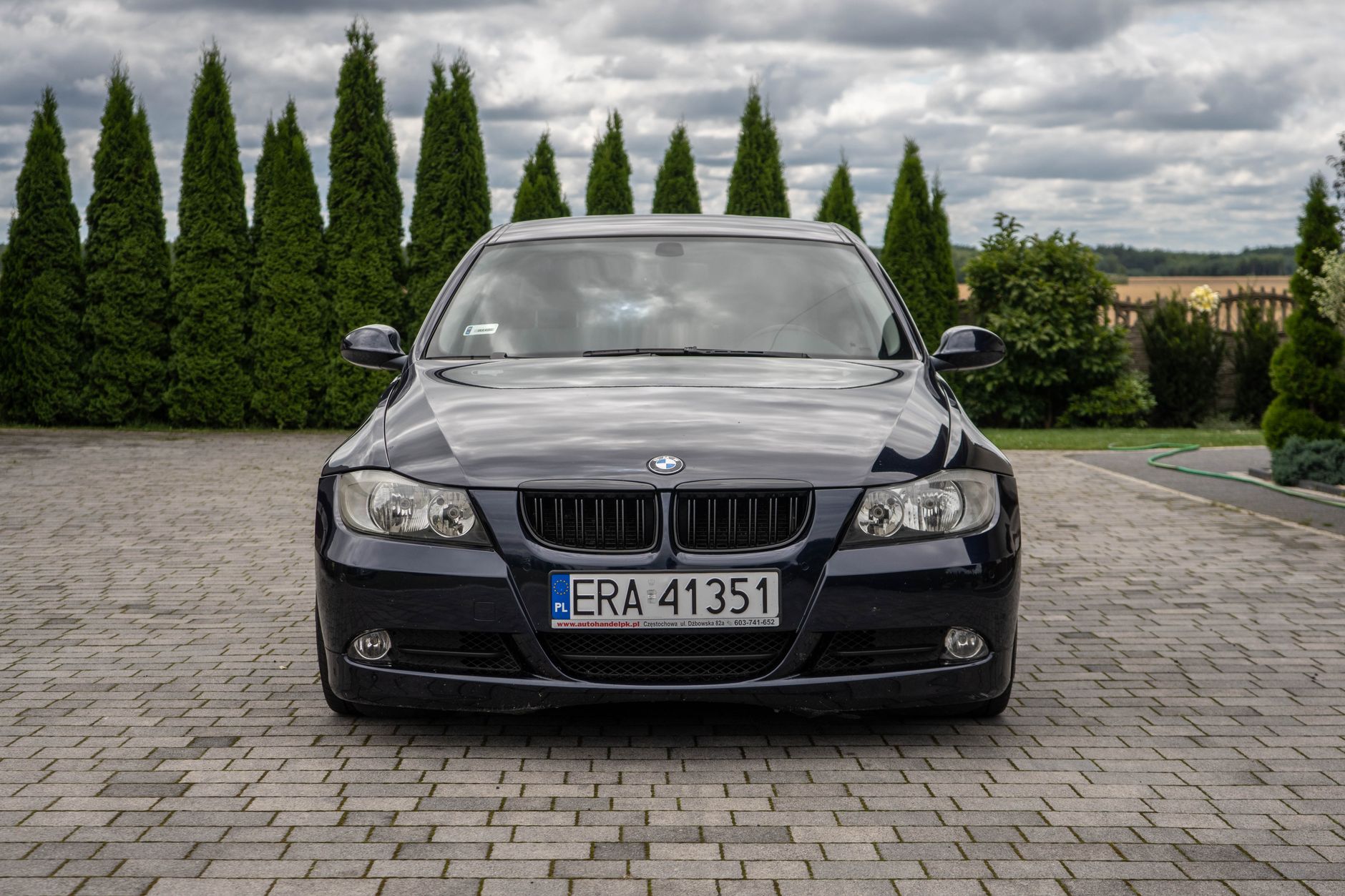
Photo: Calreyn88 / CC BY-SA 4.0 / Wikimedia Commons
BMW 3 Series
Sedan · Gas · 544 versions · owner report
Ranked #6 of 17 luxury compact cars on owner data, price and fuel economy
Every generation
Power
0–62 mph (0–100 km/h)
Top speed (250 km/h)
Combined, EPA 2026
What owners say
Our take, from owner reports
Sentiment is generally positive, with the 3 Series consistently praised for its driving dynamics, handling, and performance, particularly in higher-powered variants like the 330i and M340i.
6 problems reported (1 very frequent, 2 recurrent, 3 isolated) · medium confidence
Problems owners report
- Very frequentHigh maintenance and repair costs
Recurrent mention of expensive parts and labor, especially if not performing work oneself.
- RecurrentInterior feature packaging
Criticism that common features (e.g., adaptive cruise control, heated seats) are bundled in expensive packages or unavailable on base models.
- RecurrentOil leaks and general aging components
Expected on higher-mileage examples of older generations (E46, E9x).
+ 3 more issuesShow fewer
- IsolatedTiming chain issues
Specifically noted on F30 320d models, requiring replacement around 100,000-mile mark.
- IsolatedEngine accessory belt failure risk
On certain engines, a failed belt can be drawn into the engine, causing severe damage.
- IsolatedRunout and squealing brakes
Specifically noted on M Sport brakes, potentially exacerbated by cold climates and improper bedding.
The version owners recommend
For the F30 generation (approx. 2012-2019), the 330i is specifically recommended as an "amazing daily." For the G20 generation (2019+), the M340i is highlighted as a "clear winner" and a top "grown-up performance vehicle," with its B58 engine frequently praised. There is a strong consensus to avoid underpowered base engines (e.g., 316/318) and to prioritize the M Sport trim for improved aesthetics and steering wheel. For used purchases, the F30 generation with 50k-80k miles is noted as a sweet spot for value.
Competitors to consider
Owners compare it most often with the Audi A4/S4, Mercedes-Benz C-Class, Volvo V60/S60, Tesla Model 3 and Honda Civic.
Is the 3 Series right for you?
Get an answer for your year, mileage and budget.
Full owner reportHide full owner report
Overall sentiment
Sentiment is generally positive, with the 3 Series consistently praised for its driving dynamics, handling, and performance, particularly in higher-powered variants like the 330i and M340i. The vehicle is described as fun to drive, with great steering, brakes, and a stable, planted feel. However, owner feedback is heavily segmented by generation and engine choice. Recurrent themes include concerns over higher maintenance and repair costs compared to mainstream brands, the importance of diligent preventative maintenance, and the impact of optional equipment on the interior quality and ownership experience. Satisfaction appears high among owners who prioritize driving engagement and are prepared for the associated costs, while those seeking low-cost ownership or maximum feature content for the price often express reservations.
Positioning vs competitors
Positioned as a dynamic leader in the compact luxury sedan segment. Owner discussions frequently state that for driving enjoyment, BMWs have historically been the consensus leader when a Porsche is not an option. The Cadillac ATS/ATS-V from 2013-2019 is noted as a dynamic exception that was superior but let down by interior quality. Compared to a Mercedes C-Class, the 3 Series is perceived as sportier and more engaging. Versus Audi, the BMW is often favored for its driving feel. Against mainstream competitors like the Honda Civic, the BMW is acknowledged as a luxury car with superior driving dynamics but significantly higher ownership costs and often missing standard features that are included in cheaper cars. The Tesla Model 3 is cited as a competitor with lower maintenance but lacking certain luxury features like a heads-up display.
Recommended configurations
M Sport trim is widely recommended for improved looks and steering wheel. Higher-powered engines (330i, M340i) are favored over base 4-cylinder models. For diesel models in certain markets, the 320d is noted for low tax and good fuel economy. Optional LED or xenon headlights are strongly advised over standard halogens. All-wheel drive (xDrive) is not explicitly recommended in the data, but rear-wheel drive is implied as the traditional choice for dynamics. For the F30, a post-LCI (Life Cycle Impulse) model is preferred for updated headlights.
General recommendations
Suitable for buyers who prioritize driving dynamics and engagement over lowest cost of ownership. Not recommended for those unwilling to budget for higher maintenance costs or potential repairs. A pre-purchase inspection by a BMW specialist is considered essential for used models. Owners should be prepared to allocate a significant sum (50-100% of purchase price) for immediate repairs on older generations like the E46. For newer models, verifying service history is critical, especially for timing chain replacement on certain diesel engines around 100k miles. Leasing is mentioned as a common strategy to mitigate long-term reliability concerns and depreciation. Aggressively negotiate optional packages, as base models may lack common features.
Remarks
Owner feedback spans multiple generations (E46, E9x, F30, G20), making specific issue attribution complex. The legendary status of the inline-6 engines, particularly the modern B58, is a major positive theme, cited for performance and reliability. There is a notable divide in perception: enthusiasts and owners who perform their own maintenance report high satisfaction and manageable costs, while those reliant on dealerships emphasize expensive ownership. The data suggests a model's specific engine, production year, and optional equipment drastically alter the ownership experience. Analysis based on approximately 45 substantive owner discussions and comparisons.
Generation by generation
Owner insights per generation and US complaint/recall records (NHTSA).
3 Series (G20)2018–2026415 complaints · 6 recallsmoderate confidenceRead report
Most-reported areas (NHTSA): engine (120) · electrical system (110) · unknown or other (75)
Our take, from owner reports
Owner sentiment on the G20 3 Series is broadly positive, with the strongest praise going to the B48/B58 engines and the ZF 8-speed transmission, which owners repeatedly describe as solid and reliable.
10 problems reported (2 very frequent, 4 recurrent, 4 isolated) · medium confidence
Problems owners report
- Very frequentRemoval of physical climate
Favorites, and driving mode buttons on LCI models, requiring extra screen taps.
- Very frequentLarge curved screen design and loss of the traditional shifter drawing criticism
- RecurrentBrake pad warning light appearing unusually early, around 17K-23K miles
+ 7 more issuesShow fewer
- RecurrentFaulty or damaged brake pad sensor triggering false warnings
- RecurrentSteering feel described as numb and isolating compared to older generations
- RecurrentCar growing larger with each generation, now comparable to older 5 Series
- IsolatedInadequate adhesive on the sharkfin roof antenna leading to liquid damage to computers
- IsolatedSeized caliper slider causing premature pad wear
- IsolatedPlastic components expected to break with age
- IsolatedLane departure assistance system giving sudden, shocking responses
Is a 2018–2026 3 Series right for you?
Get an answer for your year, mileage and budget.
3 Series (F30)2011–20195,360 complaints · 47 recallshigh confidenceRead report
Most-reported areas (NHTSA): engine (1617) · electrical system (1208) · engine and engine cooling (798)
Our take, from owner reports
Owner sentiment on the F30 is mixed but leans positive when the car has been maintained.
11 problems reported (3 recurrent, 8 isolated) · high confidence
Problems owners report
- RecurrentTiming chain failure on the N20 four-cylinder
With repair quotes ranging from $12,000 to $22,000 for a new engine.
- RecurrentOil leaks, described as a matter of when rather than if on the N55
- RecurrentWater pump and thermostat failure on high-mileage cars
+ 8 more issuesShow fewer
- IsolatedWorn front thrust rod bushings around 75,000 miles
- IsolatedTurbo oil feed lines worn at 36,000 miles
- IsolatedElectrical failure traced to a wiring harness rubbed by a bracket
- IsolatedPower steering pump failure
- IsolatedFuel pressure sensor failure
- IsolatedRain water leaking into the cabin through door seals and a clogged sunroof drain
- IsolatedBrake rotor surface rust
- IsolatedDrivetrain error messages accompanied by misfires and a camshaft sensor fault
Is a 2011–2019 3 Series right for you?
Get an answer for your year, mileage and budget.
3 Series (E92)2006–20137,008 complaints · 41 recallshigh confidenceRead report
Most-reported areas (NHTSA): air bags (1977) · engine (1636) · electrical system (1567)
Our take, from owner reports
Owners of the 2006-2013 E92 3 Series generally describe it as a rewarding car to own and drive, with the naturally aspirated six-cylinder 328i earning the strongest praise for reliability and low running costs.
15 problems reported (7 recurrent, 8 isolated) · high confidence
Problems owners report
- RecurrentHigh-pressure fuel pump failure on N54 335i
- RecurrentWater pump and thermostat failure
- RecurrentOil filter housing gasket leak
+ 12 more issuesShow fewer
- RecurrentValve cover gasket leak
- RecurrentTiming chain issues on the N20 four-cylinder
- RecurrentCooling system wear as a general weak point
- RecurrentOil leaks requiring expensive repair
- IsolatedRear window regulator failure
- IsolatedCabin fan/blower motor failure
- IsolatedFolding side mirror failure
- IsolatedPower steering pump failure
- IsolatedTransfer case issue on xDrive
- IsolatedSunroof sensor issues
- IsolatedBrake pad wear sensor triggering the brake light
- IsolatedO2 sensor failure
Is a 2006–2013 3 Series right for you?
Get an answer for your year, mileage and budget.
3 Series (E90)2005–20126,431 complaints · 36 recallshigh confidenceRead report
Most-reported areas (NHTSA): air bags (1963) · electrical system (1401) · engine (1363)
Our take, from owner reports
Owners of the E90 generation generally regard it as a rewarding driver's car that rewards diligent maintenance, with the naturally aspirated six-cylinder models (325i, 328i, 330i) earning the strongest praise for reliability and the turbocharged 335i drawing enthusiasm for performance but warnings about cost.
15 problems reported (2 very frequent, 5 recurrent, 8 isolated) · high confidence
Problems owners report
- Very frequentCooling system failures (water pump, thermostat, expansion tank)
- Very frequentOil leaks (valve cover gasket, oil filter housing gasket, oil pan gasket)
- RecurrentHigh pressure fuel pump failure on 335i (N54)
+ 12 more issuesShow fewer
- RecurrentTiming chain issues on the 328i around 100k miles
- RecurrentVANOS solenoid and ignition coil failures
- RecurrentWindow regulator failure
- RecurrentOil consumption and general oil leaks
- IsolatedRear window regulator replacement cost
- IsolatedFolding rearview mirror failure
- IsolatedCabin fan failure
- IsolatedPower steering pump failure
- IsolatedFuel pressure sensor failure
- IsolatedTransfer case issue on xDrive
- IsolatedSunroof sensor failure
- IsolatedAutomatic transmission problems
Is a 2005–2012 3 Series right for you?
Get an answer for your year, mileage and budget.
3 Series Compact (E46)2001–20052,257 complaints · 10 recallshigh confidenceRead report
Most-reported areas (NHTSA): air bags (774) · exterior lighting (501) · electrical system (304)
Our take, from owner reports
Sentiment is sharply divided.
9 problems reported (1 very frequent, 5 recurrent, 3 isolated) · high confidence
Problems owners report
- Very frequentCooling system failures (water pump, radiator, expansion tank, thermostat, hoses)
- RecurrentExcessive oil consumption (up to 1 quart per 1000 km)
- RecurrentRear subframe tearing away from the body
+ 6 more issuesShow fewer
- RecurrentMisfiring (often due to ignition coils)
- RecurrentExpensive repairs (window regulators
Fuel pump, motor mounts, power steering components, valve cover gasket, GM5 module)
- RecurrentElectrical issues (power windows, steering wheel controls, air conditioning sensor problems)
- IsolatedAir conditioning problems (related to ambient temperature sensor or refrigerant)
- IsolatedVacuum leaks from plastic lines and fittings
- IsolatedRust (underbody)
Is a 2001–2005 3 Series right for you?
Get an answer for your year, mileage and budget.
3 Series (E46)1998–20064,555 complaints · 34 recallshigh confidenceRead report
Most-reported areas (NHTSA): air bags (1690) · electrical system (547) · power train (519)
Our take, from owner reports
Owners of the 1998-2006 E46 3 Series describe it as a genuinely rewarding car to drive and own, provided it has been maintained.
23 problems reported (1 very frequent, 6 recurrent, 16 isolated) · high confidence
Problems owners report
- Very frequentCooling system failure (water pump, expansion tank, thermostat, radiator, hoses)
- RecurrentRear subframe cracks, primarily coupes and early model years
- RecurrentWindow regulator failure
+ 20 more issuesShow fewer
- RecurrentPlastic and rubber deterioration (hoses, gaskets, seals, trim) with age
- RecurrentSuspension and front bushing wear (control arm bushings, tie rods, strut tower mushrooming)
- RecurrentOil leaks, including valve cover gasket and oil filter housing gasket
- RecurrentOverheating causing head bolt threads to pull from the aluminum block
- IsolatedOil consumption unless a specific oil is used
- IsolatedIntake camshaft position sensor failure
- IsolatedAlternator failure
- IsolatedDifferential pinion bearing seal failure
- IsolatedOil pan gasket leak
- IsolatedDISA valve failure
- IsolatedVANOS seal failure, described as a wear item
- IsolatedIgnition coil and O2 sensor failure
- IsolatedMoonroof shade clip failure
- IsolatedAutomatic transmission failure in earlier model years
- IsolatedZKW xenon headlight quality problems
- IsolatedRust on 1999 to early 2000s cars
- IsolatedCCV (crankcase vent valve) failure
- IsolatedWheel bearing failure
- IsolatedClutch failure due to a bad self-adjusting mechanism
- IsolatedElectrical gremlins
Is a 1998–2006 3 Series right for you?
Get an answer for your year, mileage and budget.
Complaints and recalls by model yearWorst year: 2011. Years to avoid: 2014, 2013, 2011, 2007, 2006Source: NHTSA (US)Show table
Each year graded against the model's other years: Year Score. See all BMW 3 Series years to avoid
| Year | Complaints | Recalls | Most-reported area |
|---|---|---|---|
| 2026 | 1 | 0 | tires |
| 2025 | 5 | 0 | steering |
| 2024 | 22 | 0 | unknown or other |
| 2023 | 28 | 1 | electrical system |
| 2022 | 10 | 0 | power train |
| 2021 | 37 | 5 | electrical system |
| 2020 | 53 | 0 | electrical system |
| 2019 | 82 | 0 | engine |
| 2018 | 177 | 0 | engine |
| 2017 | 222 | 0 | engine |
| 2016 | 279 | 0 | engine |
| 2015 | 546 | 8 | electrical system |
| 2014 | 957 | 12 | engine |
| 2013 | 804 | 5 | engine |
Complaint counts come from owner reports filed with the US National Highway Traffic Safety Administration. Higher-selling years naturally accumulate more complaints.
Recall notices107 on record · Source: NHTSA (US)Show recalls
2023 · power train:automatic transmission:control module (tcm/pcm/tecm)campaign 23V821000
BMW of North America, LLC (BMW) is recalling certain 2023 Toyota GR Supra, 3 Series Sedan (330i xDrive, M340i xDrive, M3), 5 Series Sedan (530i, 530i xDrive, M5), 4 Series Gran Coupe (430i, 430i xDrive), 4 Series Coupe (430i, 430i xDrive, M440i xDrive), 4 Series Convertible (430i, 430i xDrive, M440i xDrive), 8 Series Coupe (840i, M850i xDrive, M8), 8 Series Convertible (840i, M850i xDrive, M8), 8 Series Gran Coupe (850i xDrive, M8), X3 SAV (X3 xDrive30i, X3M), X4 SAV (X4 xDrive30i), X5 SAV (X5 xDrive40i, X5 M50i, X5M), X6 SAV (X6 xDrive40i, X6 M50i, X6M), and Z4 sDrive30i, Z4 M40i vehicles. The weld seam of the integrated transmission control unit's cover may not have been manufactured properly, which could allow automatic transmission oil to leak into the transmission control unit.
2021 · seat beltscampaign 21V554000
BMW of North America, LLC (BMW) is recalling certain 2021 2 Series (230i, 230i xDrive, M240i, M240i xDrive), 330e, 330e Xdrive, 4 Series Coupe (430i, 430i xDrive, M440i xDrive) M4 Coupe, M4 Competition Coupe, BMW 4 Series Convertible (430i, M440i), BMW X1 sDrive28i, xDrive28i, 2 Series Gran Coupe (228i, 228i xDrive, M235i xDrive), M2 Competition Coupe, 330i, 330i xDrive, M340i, M340i xDrive, M3, M3 Competition, 530i, 530i xDrive, 540i, 540i xDrive, MINI Hardtop 2 Door (Cooper, CooperS, JCW), X2 sDrive28i, X2 xDrive28i, X2 M35i, Z4 sDrive30i, Z4 M40i, MINI Hardtop 2 Door (Cooper SE), MINI Convertible (Cooper, Cooper S, JCW), MINI Clubman (Cooper S, Cooper S All4, JCW), MINI Countryman (Cooper, Cooper All4, Cooper S, Cooper S All4, JCW All4), Rolls Royce Ghost, MINI Countryman (Cooper S E All4), Rolls Royce Phantom, Rolls Royce Cullinan, and Toyota Supra vehicles. The passenger seat belt Automatic Locking Retractor (ALR) may deactivate early, before the webbing fully retracts. As such, these assemblies fail to comply with the requirements of Federal Motor Vehicle Safety Standard number 208, "Occupant Crash Protection."
2021 · back over prevention: sensing system: cameracampaign 21V096000
BMW of North America, LLC (BMW) is recalling certain 2019-2021 X3 sDrive30i, X3 xDrive30i, X3 M40i, X3M, X4 xDrive30i, X4 M40i, M550i, X4M, X5 sDrive40i, X5 xDrive40i, X5 xDrive50i, X5M, X5 M50i, X7 xDrive40i, X7 xDrive50i, X7 M50i, Alpina XB7, 330i, 330i xDrive, M340i, M340i xDrive, and 8 Series Coupe, Convertible and Grand Coupe, 840i, 840i xDrive, M850i xDrive, M8, 2020-2021 530e, 530e xDrive, 330e, 330e xDrive, 745Le, 745Le xDrive, X5 xDrive45e, X3 xDrive30e, X6 sDrive40i, X6 xDrive40i, X6 xDrive50i, X6 M50i, X6M, 530i, 530i xDrive, 540i, 540i xDrive, M550i xDrive, M5, 740i, 740Li, 740Li xDrive, M760i Drive, M760Li xDrive, 750Li xDrive Alpina, Alpina B7 xDrive, and 2021 4 Series Coupe 430i, 430i xDrive, M440i xDrive vehicles. When shifting into Reverse, a small portion of the rearview image may be obscured, or the screen may not illuminate. As such, these vehicles fail to comply with the requirements of Federal Motor Vehicle Safety Standard (FMVSS) number 111, "Rear Visibility."
2021 · seat belts:front:buckle assemblycampaign 21V298000
BMW of North America, LLC (BMW) is recalling certain 2021 330i, 330i xDrive, M340i, M3, and 330e xDrive vehicles. The bolt securing the seat belt assembly to the frame was not tightened to specification.
2021 · electrical system:propulsion system:traction batterycampaign 20V601000
BMW of North America, LLC (BMW) is recalling certain 2020-2021 530e, 530e xDrive, 530e iPerformance and X3 xDrive30e and MINI Cooper Countryman All4 SE, 2020 BMW i8, and 2021 330e, 330e xDrive, 745Le xDrive and X5 xDrive45e vehicles. Debris may have entered one or more of the hybrid battery cells during their production.
2021 · electrical system:12v/24v/48v batterycampaign 20V490000
BMW of North America, LLC (BMW) is recalling certain 2021 330e and X5 xDrive45e, 2020-2021 X3 xDrive30e, and 2020 MINI Countryman SE ALL4 vehicles. Loose welding beads may form a conductive path between the hybrid battery cells which could lead to a short-circuit.
2015 · exterior lightingcampaign 15V520000
BMW North America, LLC (BMW) is recalling certain model year 2012-2015 320i, 320xi, 328i, 328xi, 335i, 335xi, and ActiveHybrid3 vehicles manufactured October 20, 2011, to June 22, 2015, 2014-2015 328xi Sports Wagon vehicles manufactured March 21, 2013, to March 17, 2015, 2014-2015 328d, 328xd vehicles manufactured June 28, 2013, to April 21, 2015, and 2014-2015 328xd Sports Wagon vehicles manufactured July 5, 2013, to April 21, 2015. The affected vehicles may have been programmed with new software that inadvertently makes the front side marker lights inoperative in conjunction with the parking lights or the headlights. As such, these vehicles fail to comply with the requirements of Federal Motor Vehicle Safety Standard (FMVSS) number 108, "Lamps, Reflective Devices, and Associated Equipment."
2015 · air bags:side/windowcampaign 24V288000
BMW of North America, LLC (BMW) is recalling certain 2014-2015 2 Series Coupe (228i, 228i xDrive, M235i), 3 Series Sedan (320i, 320i xDrive, 328i, 328i xDrive, 335i, 335i xDrive, M3, 328d, 328d xDrive), 4 Series Coupe (428i, 428i xDrive, 435i, 435i xDrive, M4), and 2015 4 Series Gran Coupe (428i, 428i xDrive, 435i, 435i xDrive) vehicles. The head air bag inflator may fail at the weld joint, which can cause gas to leak from the inflator or result in an inflator rupture.
2015 · air bags:frontal:driver side:inflator modulecampaign 24V527000
BMW of North America, LLC (BMW) is recalling certain 2015 6 Series Gran Coupe, 2014 5 Series Gran Turismo, 2014 5 Series Sedan, 2015 6 Series Convertible, 2015 6 Series Coupe, 2014 X5, 2013-2014 X3, 2014-2015 3 Series Sedan, 2014 4 Series Coupe, 2014 4 Series Convertible, 2014 3 Series Gran Turismo, and 2015 4 Series Gran Coupe vehicles. Please see the recall report for the complete list of models. The driver's air bag inflator may explode during deployment, due to a manufacturing defect.
2015 · engine and engine cooling:exhaust system:emission control:gas recirculation valve (egr valve)campaign 18V755000
BMW of North America, LLC (BMW) is recalling certain 2013-2018 BMW 328d and 328d xDrive, 2014-2018 328d Sports Wagon and 328d xDrive Sports Wagon, 2014-2016 535d and 535d xDrive, 2015 740Ld xDrive, 2015-2017 X3 xDrive28d SAV and 2014-2017 X5 xDrive35d SAV vehicles equipped with an Exhaust Gas Recirculation (EGR) module with an integrated cooler. If the EGR cooler leaks internally, the coolant can mix with diesel engine soot. The high EGR temperatures may result in these particles possibly smoldering and melting the intake manifold.
2015 · power train:driveline:constant velocity jointcampaign 20V185000
BMW of North America, LLC (BMW) is recalling certain 2013-2016 328d xDrive sedans and 2013-2015 328d xDrive station wagon vehicles. The constant-velocity joint which transfers power between the transfer case and the rear drive shaft, may become damaged, possibly resulting in loss of power to the rear wheels.
2015 · fuel system, dieselcampaign 21V907000
BMW of North America, LLC (BMW) is recalling certain 2013-2018 328d, 328d xDrive, 2014-2018 328d Sports Wagon, 328d xDrive Sports Wagon, 2014-2016 535d, 535d xDrive, 2015 740Ld xDrive, 2015-2017 X3 xDrive28d SAV, and 2014-2017 X5 xDrive35d SAV diesel vehicles equipped with an Exhaust Gas Recirculation (EGR) module with an integrated cooler. The EGR cooler may leak internally, causing coolant to mix with diesel engine soot, which could result in smoldering particles and a melting intake manifold.
2015 · fuel system, diesel:delivery:fuel pumpcampaign 21V586000
BMW of North America, LLC (BMW) is recalling certain 2014-2018 328d, 328d xDrive, X5 xDrive35d, 2014-2016 535d, 535d xDrive, 2015 740Ld xDrive, and 2015-2017 X3 xDrive28d vehicles. The high-pressure fuel pump may fail.
2015 · engine and engine cooling:cooling system:pumpcampaign 24V608000
BMW of North America, LLC. (BMW) is recalling certain 2012-2015 X1 sDrive28i, X1 xDrive28i, 2012-2016 Z4 sDrive28i, 528i, 528i xDrive, 328i, 328xi, 2016-2018 X5 xdrive 40e, 2014-2016 228i, 228xi, 428i, 428i xDrive, 328xi Gran Turismo, 2013-2017 X3 sDrive28i, X3 xDrive28i, 2015-2018 X4 xDrive28i, 2015-2016 428xi vehicles. An improperly sealed electrical connector on the water pump may be exposed to water and short circuit.
2014 · exterior lightingcampaign 15V520000
BMW North America, LLC (BMW) is recalling certain model year 2012-2015 320i, 320xi, 328i, 328xi, 335i, 335xi, and ActiveHybrid3 vehicles manufactured October 20, 2011, to June 22, 2015, 2014-2015 328xi Sports Wagon vehicles manufactured March 21, 2013, to March 17, 2015, 2014-2015 328d, 328xd vehicles manufactured June 28, 2013, to April 21, 2015, and 2014-2015 328xd Sports Wagon vehicles manufactured July 5, 2013, to April 21, 2015. The affected vehicles may have been programmed with new software that inadvertently makes the front side marker lights inoperative in conjunction with the parking lights or the headlights. As such, these vehicles fail to comply with the requirements of Federal Motor Vehicle Safety Standard (FMVSS) number 108, "Lamps, Reflective Devices, and Associated Equipment."
92 older recalls not shown. Check nhtsa.gov with your VIN for the full history.
Specifications
Enthusiast code: G21
M340i Mild Hybrid xDrive
3.0L 6-cylinder · 392 hp · AWD · automatic
Built 2025–2026