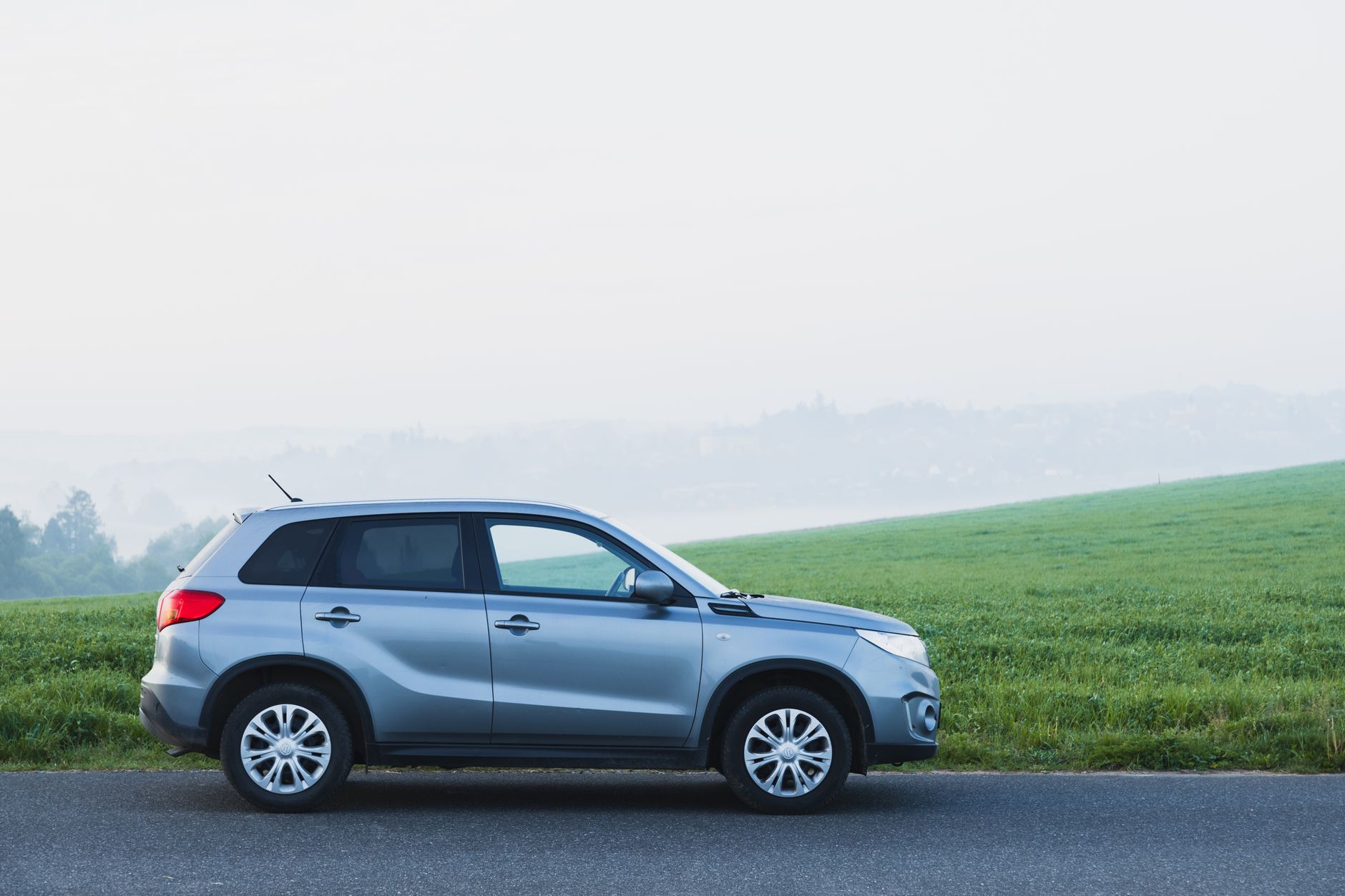
Photo: Charles / CC BY 2.0 / Wikimedia Commons
Chevrolet Equinox
SUV · Gas · 24 versions · owner report
Ranked #6 of 26 compact SUVs on owner data, price and fuel economy
Every generation
Power
Combined, EPA 2027
What owners say
Our take, from owner reports
Sentiment is sharply divided by powertrain and generation.
8 problems reported (2 very frequent, 3 recurrent, 3 isolated) · high confidence
Problems owners report
- Very frequentSevere engine problems (oil consumption
Timing chain issues, PCV valve failures leading to blown seals, complete engine failure)
- Very frequentUnresolved drivability issues (rough idle, stalling, shaking, reduced power warnings)
- RecurrentPremature front suspension failure
+ 5 more issuesShow fewer
- RecurrentSoftware and electrical glitches (blank screens
Faulty speed limit recognition, phantom parking brake engagement, Bluetooth connectivity drops)
- RecurrentParts shortages for repairs (e.g., OnStar modules, cameras, batteries), leading to long wait times
- IsolatedExcessive body rust
- IsolatedDrone/vibration noise at specific RPMs when loaded (attributed to active noise cancellation system)
- IsolatedInconvenient access to camera features on certain trim/package combinations
The version owners recommend
For the Equinox EV, the LT trim with the available Comfort and Safety Package 2 is mentioned as offering a good balance of value and features, though owners note the inconvenience of accessing the surround vision camera on this configuration. The Activ trim is selected by some for its unique interior color options. There is strong consensus that taking advantage of significant lease incentives and discounts is crucial to the EV's value proposition. For ICE models, no specific trim or version is recommended; the overarching advice is to avoid them altogether.
Competitors to consider
Owners compare it most often with the Toyota RAV4, Honda CR-V, Hyundai Ioniq 5, Tesla Model Y and Ford Mustang Mach-E.
Is the Equinox right for you?
Get an answer for your year, mileage and budget.
Full owner reportHide full owner report
Overall sentiment
Sentiment is sharply divided by powertrain and generation. For the internal combustion engine (ICE) models, particularly from the 2010s (e.g., 2011-2019), sentiment is overwhelmingly negative, dominated by reports of severe and recurrent mechanical failures leading to significant owner frustration and distrust. The consensus indicates these models are viewed as unreliable and costly to maintain long-term. In stark contrast, feedback on the new, all-electric Equinox EV (2025-2026 model years) is cautiously optimistic to positive, praising its value proposition, practicality, and driving experience. However, this positive sentiment is tempered by early reports of significant software glitches, electrical gremlins, and parts availability issues, raising concerns about initial quality control. The electric model is seen as a promising but imperfect entry in the affordable EV segment.
Positioning vs competitors
ICE models are consistently positioned as inferior to key rivals like the Toyota RAV4 and Honda CR-V in terms of long-term reliability, build quality, and resale value. Owners and commentators frequently recommend avoiding older Equinox models in favor of these Japanese competitors. The Equinox EV is positioned as a high-value, practical electric SUV. It is noted as being more affordable and offering more range than some competitors (e.g., compared to a base Tesla Model Y or Hyundai Ioniq 5 in spec comparisons), and as a significantly larger vehicle than subcompact EVs like the Hyundai Kona EV. However, it is criticized for slower charging speeds and a less refined infotainment experience compared to leaders like the Ioniq 5. It is seen as a compelling choice primarily for its price and space, not for leading technology or luxury.
Recommended configurations
For the Equinox EV, a front-wheel-drive (FWD) configuration is chosen by some owners in flat, non-snowy climates to maximize range and value over all-wheel drive (AWD). Ensuring the vehicle includes the surround vision camera system is recommended due to the vehicle's size and visibility. For ICE models, no positive configuration recommendations are made; the only recurrent advice is to avoid GM's 3.6L V6 and the 2.4L four-cylinder engines due to known failure points.
General recommendations
For the Equinox EV: Suitable for buyers seeking an affordable, spacious electric SUV with good range. Strongly consider leasing to take advantage of manufacturer incentives and mitigate depreciation. Test drive thoroughly to assess infotainment responsiveness and check for any immediate software or electrical faults. Verify parts availability with the dealer if any issues arise. Not recommended for those prioritizing the fastest charging speeds or the most polished software experience. For ICE Equinox (2010-2019 models): NOT RECOMMENDED. Owners and analysts strongly advise against purchase due to pervasive reliability issues. Considered a high-risk used vehicle purchase likely to lead to expensive repairs. If considering one, a thorough pre-purchase inspection by a trusted mechanic is an absolute necessity, but the prevailing community advice is to choose a competitor like a Toyota RAV4 or Honda CR-V instead.
Remarks
The owner experience for the Chevrolet Equinox is a tale of two fundamentally different vehicles. The ICE generations, particularly the second generation (2010-2017), are characterized in community feedback by catastrophic and repetitive mechanical failures that have severely damaged the model's reputation for reliability. The advice is uniformly negative. The launch of the all-electric Equinox represents a clean-sheet attempt to reset this perception. Early adopters are enthusiastic about its core concept, space, and efficiency, but the data shows it is suffering from significant first-model-year teething problems, primarily in software and supply chain. Its reputation hinges on GM's ability to quickly resolve these initial quality issues through over-the-air updates and improved parts logistics. Analysis based on approximately 35 substantive owner discussions and comparisons.
Generation by generation
Owner insights per generation and US complaint/recall records (NHTSA).
Complaints and recalls by model yearNo year grades F. Best year: 2009Source: NHTSA (US)Show table
Each year graded against the model's other years: Year Score.
| Year | Complaints | Recalls | Most-reported area |
|---|---|---|---|
| 2026 | 72 | 1 | service brakes |
| 2025 | 232 | 0 | electrical system |
| 2024 | 79 | 1 | fuel/propulsion system |
| 2023 | 96 | 3 | fuel/propulsion system |
| 2022 | 177 | 5 | fuel/propulsion system |
| 2021 | 97 | 4 | fuel/propulsion system |
| 2020 | 311 | 4 | service brakes |
| 2019 | 304 | 4 | engine |
| 2018 | 409 | 5 | service brakes |
| 2017 | 276 | 0 | engine |
| 2016 | 398 | 1 | engine |
| 2015 | 680 | 2 | visibility/wiper |
| 2014 | 548 | 1 | engine |
| 2013 | 751 | 2 | engine |
Complaint counts come from owner reports filed with the US National Highway Traffic Safety Administration. Higher-selling years naturally accumulate more complaints.
Recall notices47 on record · Source: NHTSA (US)Show recalls
2026 · equipment:other:owners/service/other manualcampaign 26V114000
General Motors has decided that certain 2027 Chevrolet Bolt EV, 2025-2026 Cadillac OPTIQ, Chevrolet Colorado, Equinox EV, GMC Canyon, 2026 Buick Enclave, Envision, Cadillac CT5, Escalade, Escalade ESV, Escalade IQ, Escalade IQL, LYRIQ, VISTIQ, Chevrolet Blazer EV, Corvette Convertible, Corvette Coupe, Corvette Convertible E-Ray, Equinox, Silverado 1500, 2500, 3500, Silverado EV, Suburban 1500, Tahoe, Traverse, GMC Acadia, Hummer EV Pickup, Hummer EV SUV, Sierra 1500, 2500, 3500, Sierra EV, Terrain, Yukon, and Yukon XL vehicles. The radio may not have been set to the correct status to download the electronic owner's manual during production. As such, these vehicles fail to comply with the requirements of Federal Motor Vehicle Safety Standard number 208, “Occupant Protection.”
2024 · structure:body:doorcampaign 23V869000
General Motors, LLC (GM) is recalling certain 2024 Chevrolet Blazer, Blazer EV, Equinox, and GMC Terrain vehicles. The door strikers may fracture, resulting in the door opening unexpectedly.
2023 · seatscampaign 22V724000
General Motors, LLC (GM) is recalling certain 2022-2023 Chevrolet Equinox and 2022 GMC Terrain vehicles. The driver's seat may have a stripped or loose bolt at the seat frame height-adjust pivot.
2023 · air bags:sensor:occupant classification:front passengercampaign 22V929000
General Motors, LLC (GM) is recalling certain 2023 Chevrolet Equinox and GMC Terrain vehicles equipped with ventilated front passenger seats. The Occupant Classification System may not properly disable the front passenger air bag when there is a small child or child restraint detected in the seat.
2023 · child seat:vehicle latch anchorcampaign 23V339000
General Motors, LLC (GM) is recalling certain 2020-2023 Chevrolet Equinox and GMC Terrain vehicles. The four rear-seat lower child seat LATCH anchorage bars may have excessive powder coating, which could prevent a child seat from being installed with the anchorage bars. As such, these vehicles fail to comply with the requirements of Federal Motor Vehicle Safety Standard number 225, "Child Restraint Anchorage Systems."
2022 · tirescampaign 21V612000
General Motors, LLC (GM) is recalling certain 2021-2022 Chevrolet Equinox and GMC Terrain vehicles equipped with certain Hankook tires. The tires may have been manufactured with an insufficient amount of curative agent, which could cause tread separation.
2022 · seatscampaign 22V359000
General Motors, LLC (GM) is recalling certain 2021 Chevrolet Malibu, 2022 Chevrolet Equinox, Blazer and Cadillac XT4 vehicles. The driver's seat cushion frame may have an improper weld in the power tilt-adjustment mechanism.
2022 · seatscampaign 22V724000
General Motors, LLC (GM) is recalling certain 2022-2023 Chevrolet Equinox and 2022 GMC Terrain vehicles. The driver's seat may have a stripped or loose bolt at the seat frame height-adjust pivot.
2022 · fuel system, gasoline:delivery:fuel pump:control/drive modulecampaign 23V013000
General Motors, LLC (GM) is recalling certain 2021-2022 Chevrolet Equinox and 2022 GMC Terrain vehicles. The fuel pump module may not consistently provide sufficient fuel to the engine, resulting in an engine stall.
2022 · child seat:vehicle latch anchorcampaign 23V339000
General Motors, LLC (GM) is recalling certain 2020-2023 Chevrolet Equinox and GMC Terrain vehicles. The four rear-seat lower child seat LATCH anchorage bars may have excessive powder coating, which could prevent a child seat from being installed with the anchorage bars. As such, these vehicles fail to comply with the requirements of Federal Motor Vehicle Safety Standard number 225, "Child Restraint Anchorage Systems."
2021 · seat beltscampaign 20V811000
General Motors, LLC (GM) is recalling certain 2020 Chevrolet Bolt EV and 2021 GMC Canyon and Sierra 1500, 2500 and 3500, Yukon, Yukon XL, Cadillac Escalade and Escalade ESV and Chevrolet Blazer, Camaro, Colorado, Equinox, Silverado 1500, 2500 and 3500, Suburban and Tahoe vehicles. Incorrect bolts may have been used at one or more fastening locations to secure the seat belts to the vehicle. If an incorrect bolt was used, the seat belt may not be properly attached to the vehicle.
2021 · tirescampaign 21V612000
General Motors, LLC (GM) is recalling certain 2021-2022 Chevrolet Equinox and GMC Terrain vehicles equipped with certain Hankook tires. The tires may have been manufactured with an insufficient amount of curative agent, which could cause tread separation.
2021 · fuel system, gasoline:delivery:fuel pump:control/drive modulecampaign 23V013000
General Motors, LLC (GM) is recalling certain 2021-2022 Chevrolet Equinox and 2022 GMC Terrain vehicles. The fuel pump module may not consistently provide sufficient fuel to the engine, resulting in an engine stall.
2021 · child seat:vehicle latch anchorcampaign 23V339000
General Motors, LLC (GM) is recalling certain 2020-2023 Chevrolet Equinox and GMC Terrain vehicles. The four rear-seat lower child seat LATCH anchorage bars may have excessive powder coating, which could prevent a child seat from being installed with the anchorage bars. As such, these vehicles fail to comply with the requirements of Federal Motor Vehicle Safety Standard number 225, "Child Restraint Anchorage Systems."
2020 · power train:automatic transmissioncampaign 20V668000
General Motors LLC (GM) is recalling certain 2018-2019 Chevrolet Cruze and Buick LaCrosse, 2018-2020 Chevrolet Equinox, Chevrolet Traverse and GMC Terrain, 2018 Chevrolet Malibu, 2019-2020 Buick Encore, Buick Enclave, Cadillac XT4, Chevrolet Blazer and GMC Acadia, and 2020 Cadillac XT6 vehicles. The start/stop accumulator endcap may have missing bolts.
32 older recalls not shown. Check nhtsa.gov with your VIN for the full history.
Specifications
1.5 Turbo
1.5L 4-cylinder · 175 hp · FWD · automatic (CVT)
Built 2024–2026