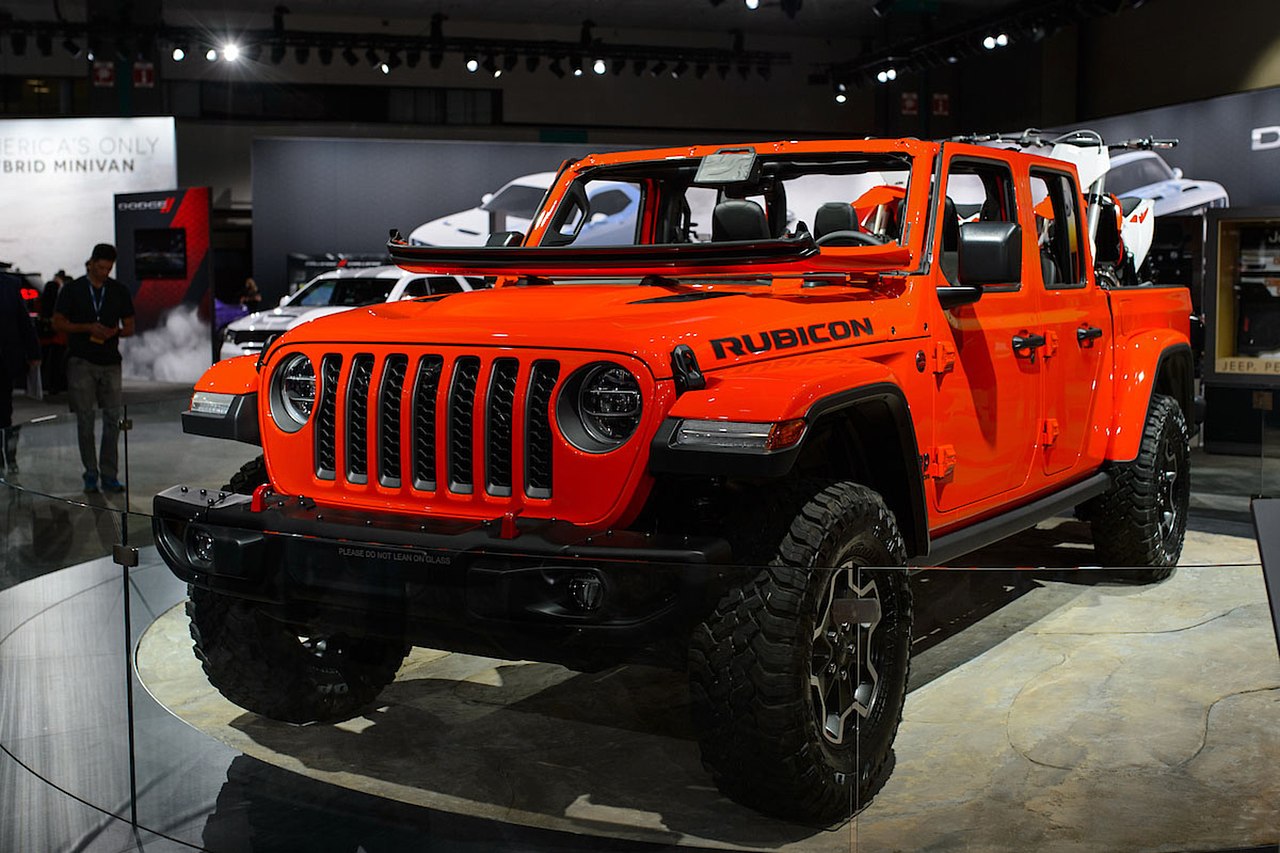
Photo: Optimuspedia / CC BY-SA 4.0 / Wikimedia Commons

Jeep Gladiator
Pick-up · Gas · 11 versions · owner report
Ranked #2 of 7 midsize pickup trucks on owner data, price and fuel economy
Power
Combined, EPA 2027
What owners say
Our take, from owner reports
Mixed sentiment with a clear divide.
6 problems reported (2 very frequent, 3 recurrent, 1 isolated) · high confidence
Problems owners report
- Very frequentElectrical system failures
Very frequent reports of primary/auxiliary battery failures, wiring harness problems, fuse blowouts, and general CAN bus system faults causing cascading issues like power steering failure.
- Very frequentPoor on-road ride and handling
Very frequent criticism for a rough, bouncy ride on pavement, excessive wind and road noise, vibrations at highway speeds (noted around 80-85 mph / 129-137 km/h), and vague steering.
- RecurrentEngine valvetrain/camshaft issues
Recurrent mentions of problems with the 3.6L Pentastar V6 engine, particularly lifter and camshaft failures, often occurring between 30,000-70,000 miles.
+ 3 more issuesShow fewer
- RecurrentDealer and manufacturer service problems
Recurrent reports of unhelpful service departments, lengthy repair times without loaner vehicles, and poor support from corporate Jeep in resolving issues.
- RecurrentBody leaks
Recurrent mentions of water leaks, particularly around the freedom tops (removable roof panels) and rear window, even on new vehicles.
- IsolatedFuel economy
Isolated mentions of poor real-world fuel economy (15-19 MPG cited), though this is generally accepted as a trade-off.
The version owners recommend
The Mojave trim is specifically praised for its superior suspension and ride quality, making it a recommended choice for overlanding and general use. The Rubicon trim is acknowledged for its ultimate off-road capability with front and rear lockers. The EcoDiesel engine is noted by some owners for its torque, though with mentions of cooling concerns. There is no single dominant "best" version, with preference depending on use case: Mojave for ride quality, Rubicon for rock crawling.
Competitors to consider
Owners compare it most often with the Toyota Tacoma, Ford Ranger, Nissan Frontier, Chevrolet Colorado/GMC Canyon and Ford Bronco.
Is the Gladiator right for you?
Get an answer for your year, mileage and budget.
Full owner reportHide full owner report
Overall sentiment
Mixed sentiment with a clear divide. The vehicle is celebrated by a dedicated enthusiast base for its unique open-air capability, unmatched off-road prowess, extensive aftermarket support, and the fun factor of a convertible truck. Owners who prioritize these attributes and accept the trade-offs report high satisfaction. However, there is a very frequent and strong consensus on significant reliability and quality issues, particularly concerning electrical systems and powertrain components. These problems are often compounded by reports of poor dealer service and manufacturer support, leading to frustration and lengthy repair times. The vehicle is also widely criticized for its on-road manners, including a rough ride, excessive noise, and poor fuel economy. The overall impression is of a highly capable but flawed niche vehicle that demands tolerance for its shortcomings.
Positioning vs competitors
Positioned as the only true off-road-focused midsize pickup with a solid front axle and open-air capability, setting it apart from all mainstream rivals. Frequently compared to the Toyota Tacoma, which is universally acknowledged as far more reliable and better at holding value, but less capable off-road and less engaging for enthusiasts. Compared to the Ford Bronco, the Gladiator is noted for having a rougher on-road ride and more vibration at highway speeds. The Rivian R1T is mentioned as a more modern, luxurious, and efficient electric alternative, though at a different price point. The consensus is that the Gladiator is a poor choice as a practical, daily-driver truck but is in a class of its own for buyers seeking a convertible, mod-friendly off-roader.
Recommended configurations
The 3.6L Pentastar V6 gasoline engine is the most discussed, with the 3.0L EcoDiesel mentioned as an alternative with more torque but potential cooling issues. All-wheel drive (4x4) is a stated requirement for intended use. Aftermarket modifications like lifts, re-gearing for larger tires (e.g., 37"), and upgraded lockers are very common owner activities. Adding an extended warranty (e.g., Mopar MaxCare) is frequently suggested due to reliability concerns. The manual transmission is noted to have awkwardly long gearing that can hamper performance.
General recommendations
Only recommended for buyers who specifically value its unique off-road capability and open-air experience above all else, including reliability, comfort, and fuel economy. Not recommended as a primary, practical daily driver or for buyers seeking a "normal" truck. Strongly advised to test drive extensively on highways to evaluate ride quality, noise, and handling. Prospective buyers should thoroughly research common issues (electrical, powertrain) and investigate the competency of their local dealer's service department before purchasing. Negotiating significant discounts from MSRP is reported as common and necessary to improve the value proposition. Owners should be prepared for higher-than-average maintenance and repair involvement.
Remarks
The "unreliable" reputation is heavily attributed to persistent electrical problems and specific engine issues with the Pentastar V6, contrasting with praise for the strength of the drivetrain and axles for off-road use. The vehicle's high depreciation and frequent dealer discounts are noted, with some owners reporting purchases $8,000-$12,000 below MSRP. The aftermarket support is described as "unmatched," enabling owners to heavily modify their vehicles, which is considered a core part of the ownership experience. The data includes references to model years 2020 through 2025, with no indication that these core issues have been resolved in later production years. Analysis based on approximately 40 substantive owner discussions.
Generation by generation
Owner insights per generation and US complaint/recall records (NHTSA).
Complaints and recalls by model yearNo year grades F. Best year: 2023Source: NHTSA (US)Show table
Each year graded against the model's other years: Year Score.
| Year | Complaints | Recalls | Most-reported area |
|---|---|---|---|
| 2026 | 3 | 2 | electrical system |
| 2025 | 15 | 1 | unknown or other |
| 2024 | 23 | 2 | electrical system |
| 2023 | 112 | 6 | electrical system |
| 2022 | 240 | 8 | steering |
| 2021 | 580 | 8 | steering |
| 2020 | 483 | 7 | electrical system |
Complaint counts come from owner reports filed with the US National Highway Traffic Safety Administration. Higher-selling years naturally accumulate more complaints.
Recall notices34 on record · Source: NHTSA (US)Show recalls
2026 · wheelscampaign 26V456000
Chrysler (FCA US, LLC) is recalling certain 2026 Jeep Gladiator and Jeep Wrangler vehicles. The walls for the steel wheels may be too thin, allowing them to crack or detach, which can result in a loss of vehicle control.
2026 · back over prevention: sensing system: cameracampaign 26V531000
Chrysler (FCA US, LLC) is recalling certain 2026 Jeep Wrangler, Jeep Gladiator, Jeep Compass, Jeep Cherokee, Jeep Grand Cherokee, Jeep Grand Cherokee L, Jeep Grand Wagoneer, Jeep Grand Wagoneer L, Ram Promaster, Ram Promaster EV, Ram 1500, Ram 2500, Chrysler Pacifica Plug-In Hybrid, Chrysler Voyager, and 2026-2027 Chrysler Pacifica and Dodge Charger vehicles. The rearview camera image may fail to display when the vehicle is placed in reverse. As such, these vehicles fail to comply with the requirements of Federal Motor Vehicle Safety Standard (FMVSS) number 111, "Rear Visibility."
2025 · steering:hydraulic power assist:pumpcampaign 26V363000
Chrysler (FCA US, LLC) is recalling certain 2021-2025 Jeep Wrangler, Wrangler 4XE, and Jeep Gladiator vehicles. The electric hydraulic power steering pump wiring may overheat and cause a vehicle fire, even when the vehicle is parked with the ignition in the "Off" position.
2024 · electrical system: instrument cluster/panelcampaign 24V652000
Chrysler (FCA US, LLC) is recalling certain 2020-2024 Jeep Gladiator and 2018-2024 Jeep Wrangler vehicles. The instrument panel cluster may experience an internal short circuit and fail. As such, these vehicles fail to comply with the requirements of Federal Motor Vehicle Safety Standard number 101, "Controls and Displays."
2024 · steering:hydraulic power assist:pumpcampaign 26V363000
Chrysler (FCA US, LLC) is recalling certain 2021-2025 Jeep Wrangler, Wrangler 4XE, and Jeep Gladiator vehicles. The electric hydraulic power steering pump wiring may overheat and cause a vehicle fire, even when the vehicle is parked with the ignition in the "Off" position.
2023 · power train:clutch assemblycampaign 23V116000
Chrysler (FCA US, LLC) is recalling certain 2018-2023 Jeep Wrangler, and 2020-2023 Jeep Gladiator vehicles equipped with manual transmissions. The clutch pressure plate may overheat and fracture.
2023 · fuel system, diesel:delivery:fuel pumpcampaign 23V263000
Chrysler (FCA US, LLC) is recalling certain 2021-2023 Jeep Wrangler, Gladiator, and 2022-2023 Ram 1500 vehicles equipped with a 3.0L diesel engine. The high pressure fuel pump (HPFP) may fail.
2023 · power train:manual transmissioncampaign 23V641000
Chrysler (FCA US), LLC is recalling certain 2022-2023 Jeep Wrangler and Gladiator vehicles equipped with a manual transmission. The rearview camera may fail to display the rearview image and the reverse lights may not illuminate when the vehicle is placed in reverse. As such, these vehicles fail to comply with the requirements of Federal Motor Vehicle Safety Standard numbers 111, "Rear Visibility" and 108, "Lamps, Reflective Devices, and Associated Equipment."
2023 · air bags:frontal:driver clockspring/spiral cassettecampaign 24V199000
Chrysler (FCA US, LLC) (Stellantis) is recalling certain 2023-2024 Ram 1500, Jeep Wrangler, Jeep Wagoneer, Jeep Grand Wagoneer, Chrysler Pacifica, Ram 3500, Ram 3500 cab chassis, Ram 2500, Ram 4500 cab chassis, Ram 5500 cab chassis, 2023 Jeep Gladiator, Jeep Grand Cherokee, Jeep Grand Cherokee L, Ram 3500 Cab Chassis with a GVWR less than 10,000 lbs., and Chrysler Voyager vehicles. The steering column control module may not be welded properly, which can prevent the driver's air bag from deploying in a crash. As such, these vehicles fail to comply with the requirements of Federal Motor Vehicle Safety Standard number 208, "Occupant Crash Protection."
2023 · electrical system: instrument cluster/panelcampaign 24V652000
Chrysler (FCA US, LLC) is recalling certain 2020-2024 Jeep Gladiator and 2018-2024 Jeep Wrangler vehicles. The instrument panel cluster may experience an internal short circuit and fail. As such, these vehicles fail to comply with the requirements of Federal Motor Vehicle Safety Standard number 101, "Controls and Displays."
2023 · steering:hydraulic power assist:pumpcampaign 26V363000
Chrysler (FCA US, LLC) is recalling certain 2021-2025 Jeep Wrangler, Wrangler 4XE, and Jeep Gladiator vehicles. The electric hydraulic power steering pump wiring may overheat and cause a vehicle fire, even when the vehicle is parked with the ignition in the "Off" position.
2022 · power train:automatic transmission:internal:park pawlcampaign 22V639000
Chrysler (FCA US, LLC) is recalling certain 2022 Jeep Gladiator vehicles. The transmission parking wheel may not properly engage with the parking mechanism.
2022 · seat belts:pretensionercampaign 22V766000
Chrysler (FCA US, LLC) is recalling certain 2022 Ram 1500, Jeep Gladiator, and 2021 Jeep Wrangler vehicles. The front seat belt retractors may have an improperly welded micro gas generator, which can result in seat belt pretensioner failure.
2022 · fuel system, gasoline:delivery:fuel pumpcampaign 22V767000
Chrysler (FCA US, LLC) is recalling certain 2020-2022 Jeep Wrangler, Ram 1500, and 2021-2022 Jeep Gladiator vehicles equipped with 3.0L diesel engines. The high pressure fuel pump (HPFP) may fail, causing an engine stall.
2022 · power train:clutch assemblycampaign 23V116000
Chrysler (FCA US, LLC) is recalling certain 2018-2023 Jeep Wrangler, and 2020-2023 Jeep Gladiator vehicles equipped with manual transmissions. The clutch pressure plate may overheat and fracture.
19 older recalls not shown. Check nhtsa.gov with your VIN for the full history.
Specifications
Enthusiast code: JT
Willys 3.6 Pentastar V6
3.6L 6-cylinder · 285 hp · AWD · automatic
Built 2024–2026