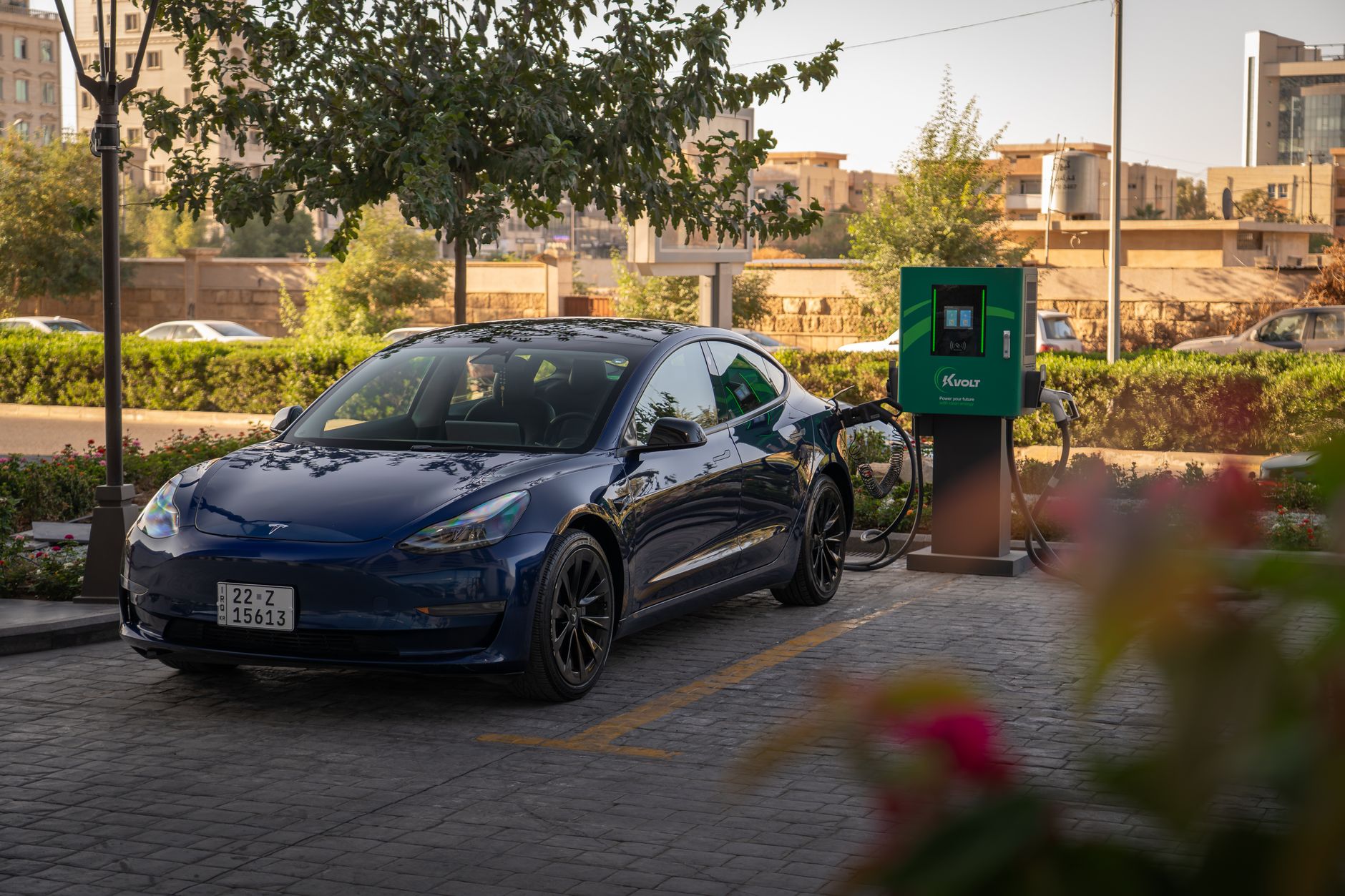
Photo: Wikimedia Commons (CC)
Tesla Model 3
Sedan · Electric · 19 versions · owner report
Ranked #7 of 10 luxury midsize cars on owner data, price and fuel economy
Every generation
Power
0–62 mph (0–100 km/h)
Top speed (261 km/h)
Combined, EPA 2027
What owners say
Our take, from owner reports
Mixed sentiment with a clear generational divide.
7 problems reported (1 very frequent, 5 recurrent, 1 isolated) · medium confidence
Problems owners report
- Very frequentFront suspension/control arm failures
Worn out control arms, loose steering racks, described as "almost inevitable" and a primary cause of high failure rates in mandatory vehicle inspections.
- RecurrentBuild quality and water leaks
Trunk and frunk leaks that can recur after paid repairs.
- RecurrentHigh out-of-warranty repair costs
Significant expenses for components like the onboard charger, amplifier, and suspension parts after warranty expiration.
+ 4 more issuesShow fewer
- RecurrentExcessive road and wind noise
Noticeable at highway speeds, making the cabin feel less premium than competitors.
- RecurrentBattery range reduction in cold weather
Significant loss of range in winter conditions, a noted challenge for EVs but specifically mentioned as a learning point for Model 3 owners.
- RecurrentPhantom braking with Autopilot
Uncommanded severe braking events while using driver-assistance features, leading some owners to discontinue use.
- IsolatedRapid depreciation
Severe loss in resale value over a few years, with one owner citing a drop from over $70,000 to $13,000.
The version owners recommend
Insufficient owner data available to declare a consensus "best" version. Discussions indicate a trade-off: the Long Range AWD model is noted for extra mileage and all-weather capability, while the Performance model is desired for its faster acceleration and exterior styling. One owner of a Rear-Wheel Drive model with an LFP battery reported high satisfaction and strong battery health after high mileage.
Competitors to consider
Owners compare it most often with the BMW 3-Series, BMW i4, Polestar 2, Ford Mustang Mach-E and Audi e-tron/Q4 e-tron.
Is the Model 3 right for you?
Get an answer for your year, mileage and budget.
Full owner reportHide full owner report
Overall sentiment
Mixed sentiment with a clear generational divide. Long-term owners of earlier models (pre-2024 "Highland") report significant mechanical reliability issues, particularly with suspension components, leading to high out-of-warranty repair costs and diminished resale value. These owners often express frustration with build quality, citing water leaks and inconsistent service experiences. However, the vehicle is simultaneously praised for its driving dynamics, described as nimble and fast, with strong acceleration. The software, user interface, and core electric vehicle experience: including home charging convenience and the Supercharger network: receive consistent positive feedback. A recurring and significant theme is the brand's association with its CEO, Elon Musk, with many owners stating his public persona and political views are a direct deterrent to repurchase, creating a conflict between product satisfaction and brand alignment. Sentiment among owners of newer models appears more positive regarding build quality, but data is limited.
Positioning vs competitors
Positioned as a tech-forward, performance-oriented sedan that prioritizes software integration and driving engagement over traditional luxury refinement. Frequently compared to sporty compact executive sedans like the BMW 3-Series and i4, with owners noting the Tesla offers superior acceleration and software but falls short on cabin noise isolation, ride comfort, interior material quality, and perceived long-term build reliability. Compared to newer Chinese EVs like the Xiaomi SU7 and BYD Seal, the Model 3 is seen as an older design that may be outperformed on paper specs and value, but benefits from an established charging network and software maturity. Against mainstream EVs like the Volkswagen ID.3 or MG4, it is positioned as a more premium, performance-focused option.
Recommended configurations
Insufficient owner data available for specific configuration recommendations beyond powertrain choice. One owner recommended an independent inspection prior to the expiration of the new vehicle warranty to identify common issues for coverage.
General recommendations
Suitable for buyers who prioritize software experience, acceleration, and access to the Supercharger network. Not recommended for buyers who place a high priority on cabin quietness, plush ride quality, or traditional luxury interior materials. Strongly advised to test drive at highway speeds to evaluate road noise and ride comfort. For used models, particularly pre-2024 examples, a thorough pre-purchase inspection focusing on suspension components is critical. Buyers should be aware of the potential for significant depreciation and high out-of-warranty repair costs. The brand's political associations are a noted and frequent consideration in the purchase decision for many.
Remarks
Owner feedback is heavily influenced by model year, with a stark contrast between experiences with earlier (e.g., 2019-2022) and newer (2024+ Highland) vehicles. The data contains more detailed long-term ownership reports from earlier models, which skews the issue reporting toward problems that may have been addressed in later production. The brand's image is inextricably linked to its CEO in owner discussions, representing a unique and frequently cited non-engineering factor affecting repurchase intent. Data on the refreshed "Highland" Model 3 is limited, primarily noting improvements in noise isolation and suspension. Analysis based on approximately 50 substantive owner discussions and comments.
Generation by generation
Owner insights per generation and US complaint/recall records (NHTSA).
Complaints and recalls by model yearNo year grades F. Best year: 2017Source: NHTSA (US)Show table
Each year graded against the model's other years: Year Score.
| Year | Complaints | Recalls | Most-reported area |
|---|---|---|---|
| 2026 | 24 | 1 | unknown or other |
| 2025 | 117 | 3 | unknown or other |
| 2024 | 217 | 5 | unknown or other |
| 2023 | 425 | 12 | forward collision avoidance |
| 2022 | 765 | 18 | forward collision avoidance |
| 2021 | 663 | 22 | forward collision avoidance |
| 2020 | 451 | 21 | forward collision avoidance |
| 2019 | 613 | 22 | forward collision avoidance |
| 2018 | 1,023 | 19 | forward collision avoidance |
| 2017 | 26 | 16 | forward collision avoidance |
Complaint counts come from owner reports filed with the US National Highway Traffic Safety Administration. Higher-selling years naturally accumulate more complaints.
Recall notices139 on record · Source: NHTSA (US)Show recalls
2026 · seats:critical fastenerscampaign 25V410000
Tesla, Inc. (Tesla) is recalling certain 2026 Model 3 and Model Y vehicles. The fasteners attaching the seat back to the seat bottom may have been improperly tightened.
2025 · tires:pressure monitoring and regulating systemscampaign 24V935000
Tesla, Inc. (Tesla) is recalling certain 2024 Cybertruck, 2017-2025 Model 3, and 2020-2025 Model Y vehicles. The tire pressure monitoring system (TPMS) warning light may not remain illuminated between drive cycles, failing to warn the driver of low tire pressure. As such, these vehicles fail to comply with the requirements of Federal Motor Vehicle Safety Standard number 138, "Tire Pressure Monitoring Systems."
2025 · back over prevention:softwarecampaign 25V002000
Tesla, Inc. (Tesla) is recalling certain 2024-2025 Model 3, Model S, 2023-2025 Model X, and Model Y vehicles. The computer circuit board may short, resulting in the loss of the rearview camera image. As such, these vehicles fail to comply with the requirements of Federal Motor Vehicle Safety Standard (FMVSS) number 111, "Rear Visibility."
2025 · electrical system:propulsion system:fuses, relays, contacts, and shuntscampaign 25V690000
Tesla, Inc. (Tesla) is recalling certain 2025 Model 3 and 2026 Model Y vehicles. The battery pack contactors may fail, causing a loss of drive power.
2024 · air bags:side/window:thoraxcampaign 24V284000
Tesla, Inc. (Tesla) is recalling one 2024 Model 3 vehicle. The driver seat side air bag module was assembled without a deflector that directs gas flow during deployment.
2024 · latches/locks/linkages:hood:latchcampaign 24V554000
Tesla, Inc. (Tesla) is recalling certain 2021-2024 Model 3, Model S, Model X, and 2020-2024 Model Y vehicles. The hood latch assembly may fail to detect an unlatched hood condition after the hood has been opened.
2024 · tires:pressure monitoring and regulating systemscampaign 24V935000
Tesla, Inc. (Tesla) is recalling certain 2024 Cybertruck, 2017-2025 Model 3, and 2020-2025 Model Y vehicles. The tire pressure monitoring system (TPMS) warning light may not remain illuminated between drive cycles, failing to warn the driver of low tire pressure. As such, these vehicles fail to comply with the requirements of Federal Motor Vehicle Safety Standard number 138, "Tire Pressure Monitoring Systems."
2024 · back over prevention:softwarecampaign 25V002000
Tesla, Inc. (Tesla) is recalling certain 2024-2025 Model 3, Model S, 2023-2025 Model X, and Model Y vehicles. The computer circuit board may short, resulting in the loss of the rearview camera image. As such, these vehicles fail to comply with the requirements of Federal Motor Vehicle Safety Standard (FMVSS) number 111, "Rear Visibility."
2024 · structure:body:bumperscampaign 26V445000
Tesla, Inc. (Tesla) is recalling certain 2026 Model Y and 2024 Model 3 vehicles. The vehicles were originally built for a foreign market and do not have knee air bags, may not be equipped with certain interior safety countermeasures, and may not have been tested for bumper impact resistance procedures. As such, these vehicles fail to comply with the requirements of Federal Motor Vehicle Safety Standard numbers, 208, "Occupant Crash Protection," 201, "Occupant Protection in Interior Impact," and Part 581, "Bumper Standards."
2023 · exterior lighting:tail lightscampaign 22V844000
Tesla, Inc. (Tesla) is recalling certain 2023 Model 3 and 2020-2023 Model Y vehicles. One or both taillights may intermittently fail to illuminate.
2023 · air bags:side/window:curtaincampaign 21V834000
Tesla, Inc. (Tesla) is recalling certain 2020-2021, 2023 Model 3 vehicles. The left and/or right side curtain air bag may have been improperly secured to the roof rail, which could result in a twisted air bag. As such, these vehicles fail to comply with the requirements of Federal Motor Vehicle Safety Standard numbers 214, "Side Impact Protection" and 226, "Ejection Mitigation."
2023 · steering:automated/adaptive steeringcampaign 23V085000
Tesla, Inc. (Tesla) is recalling certain 2016-2023 Model S, Model X, 2017-2023 Model 3, and 2020-2023 Model Y vehicles equipped with Full Self-Driving Beta (FSD Beta) software or pending installation. The FSD Beta system may allow the vehicle to act unsafe around intersections, such as traveling straight through an intersection while in a turn-only lane, entering a stop sign-controlled intersection without coming to a complete stop, or proceeding into an intersection during a steady yellow traffic signal without due caution. In addition, the system may respond insufficiently to changes in posted speed limits or not adequately account for the driver's adjustment of the vehicle's speed to exceed posted speed limits.
2023 · electrical system:propulsion system:traction batterycampaign 23V434000
Tesla, Inc. (Tesla) is recalling certain 2023 Model 3 and Model Y vehicles. The pyrotechnic battery disconnect may be defective.
2023 · electrical system:adas:autonomous/self driving:softwarecampaign 23V838000
Tesla, Inc. (Tesla) is recalling 2012-2023 Model S, 2016-2023 Model X, 2017-2023 Model 3, and 2020-2023 Model Y vehicles equipped with all versions of Autosteer leading up to the version(s) that contains the recall remedy. In certain circumstances when Autosteer is engaged, the prominence and scope of the feature's controls may not be sufficient to prevent driver misuse of the SAE Level 2 advanced driver-assistance feature.
2023 · electrical system: instrument cluster/panelcampaign 24V051000
Tesla, Inc. (Tesla) is recalling certain 2012-2023 Model S, 2016-2024 Model X, 2017-2023 Model 3, 2019-2024 Model Y, and 2024 Cybertruck vehicles. An incorrect font size is displayed on the instrument panel for the Brake, Park, and Antilock Brake System (ABS) warning lights. As such, these vehicles fail to comply with the requirements of Federal Motor Vehicle Safety Standard number 105, "Hydraulic and Electric Brake Systems" and 135, "Light Vehicle Brake Systems."
124 older recalls not shown. Check nhtsa.gov with your VIN for the full history.
Specifications
Performance 82 kWh Dual Motor
Electric · 510 hp · AWD · automatic
Built 2024–2026