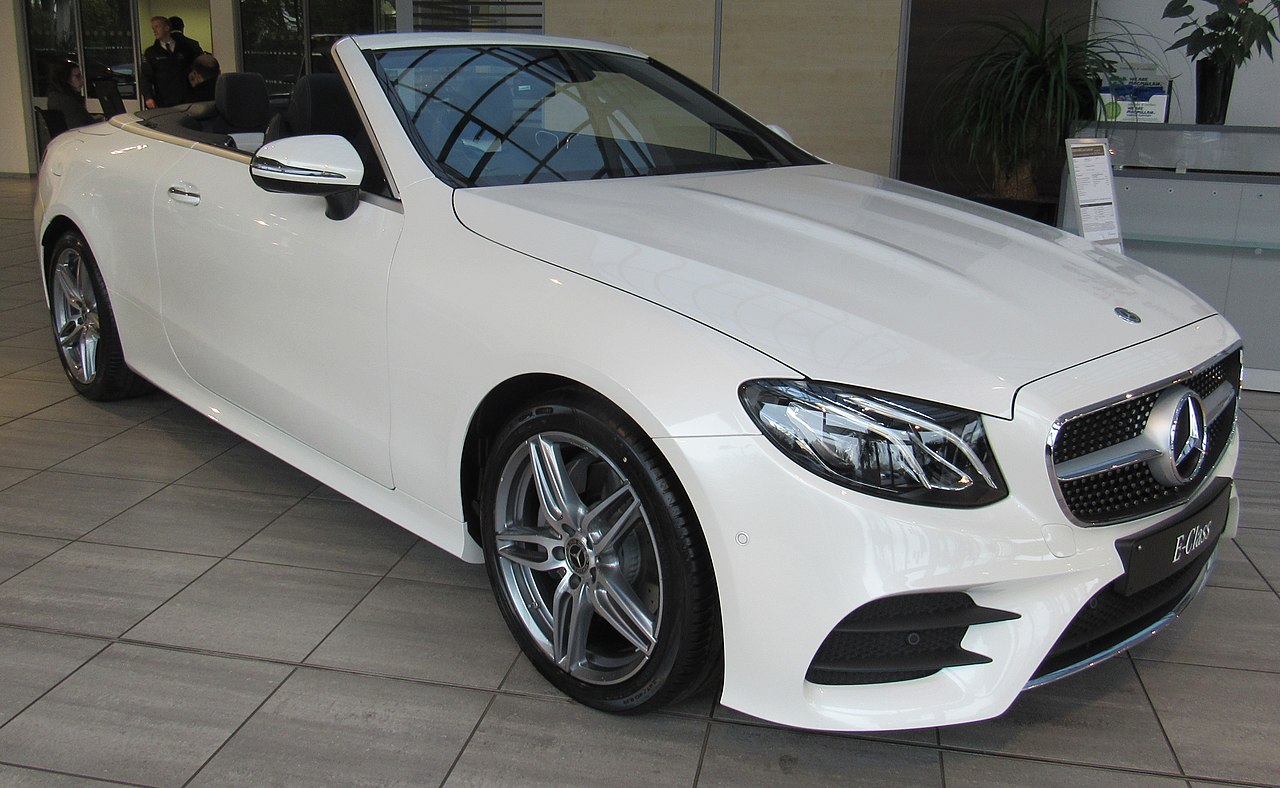
Photo: Vauxford / CC BY-SA 4.0 / Wikimedia Commons
2018 Mercedes-Benz E-class: common problems and reliability
· C238An average E-class year.
71 owner complaints, most about engine. 1 recall.
Should I buy a 2018 E-class?The 2018 Mercedes-Benz E-class has 71 owner-filed NHTSA complaints and 1 recall on record. The most-reported areas are engine and electrical system. Owners most often flag high maintenance costs: multiple owners report that dealer servicing, especially transmission fluid changes ($700-$1800), is expensive, and annual maintenance can reach $4k.
Safety record for the 2018 model year
Source: NHTSA complaints and recalls filed for 2018 Mercedes-Benz E-class vehicles (US, public record).
The Year Score compares this year with other E-class years only. How we score it
Is 2018 a good year for the E-class?
Across the 25 E-class model years we track, complaint volume runs from 40 (2021) to 912 (2014). With 71 complaints, the 2018 E-class sits below the model's median of 171.
These are raw NHTSA complaint totals, not adjusted for how many cars sold or how long each model year has been on the road. Older and higher-selling years accumulate more complaints.
Where owners report problems
Recalls affecting the 2018 E-class
power train:driveline:universal joint
Campaign 26V216000Mercedes-Benz USA, LLC (MBUSA) is recalling certain 2018 E 400 4MATIC Sedan, E 400 4MATIC Wagon, E 400 4MATIC Cabriolet, E 400 4MATIC Coupe, 2018-2020 Maybach S 560 4MATIC, S 560 4MATIC Coupe, S 450 4MATIC, 2019-2020 E 450 4MATIC Sedan, E 450 4MATIC Wagon, E 450 4MATIC Coupe, and E 450 4MATIC Cabriolet vehicles. The drive shaft universal joint may break, resulting in a sudden loss of drive power.
What owners report on the C238 E-class
Owners of the C238 E-class coupe are overwhelmingly positive, praising its gorgeous styling, comfortable and luxurious interior, and strong reliability. The car is described as a huge upgrade over its predecessor, particularly in interior quality.
- RecurrentHigh maintenance costs
Multiple owners report that dealer servicing, especially transmission fluid changes ($700-$1800), is expensive, and annual maintenance can reach $4k.
- IsolatedTransmission hesitation or rough shifting at low speeds
One owner reported kick-down issues that were resolved by a full transmission service (fluid, filter, torque converter drain, recalibration).
- IsolatedRear window shade getting stuck
One owner reported this as the only issue in 60k miles.
- IsolatedDiesel engine rattle at low revs under power
One owner reported this on two OM654-equipped cars and was able to fix it.
- IsolatedSqueaky driver-side window in cold weather
One owner reported this, fixed with lubricant.
Owner insights for the C238 E-class. Read the full C238 owner report.
Typical used price
Used E-class listings typically run $14,000–$30,990.
Other E-class model years
Compare every E-class year side by side to see how 2018 ranks against the rest.
Compare the E-class against its rivals
Looking at a specific car?
We're building a full check by VIN: the exact trim and engine, its known problems and recalls, what to inspect, a fair price, and how it compares with its rivals. Get an email when it's ready.
One email when it launches. Unsubscribe any time. Privacy