
Photo: Alexander Migl / CC BY-SA 4.0 / Wikimedia Commons
Mazda CX-5
SUV · Gas · 44 versions · owner report
Ranked #11 of 26 compact SUVs on owner data, price and fuel economy
Every generation
Power
Combined, EPA 2026
What owners say
Our take, from owner reports
The sentiment is predominantly positive, with the CX-5 consistently praised for its reliability, premium interior feel, and engaging driving dynamics.
7 problems reported (1 very frequent, 4 recurrent, 2 isolated) · high confidence
Problems owners report
- Very frequentInfotainment interface dissatisfaction
Lack of touchscreen (pre-2026) criticized as slower and less intuitive; the new 2026 touchscreen is criticized by owners who preferred the previous rotary dial system.
- RecurrentInterior build quality concerns
Reports of delicate materials: steering wheel leather peeling, piano black trim scratching easily, and noticeable interior noises.
- RecurrentRoad and wind noise
Noticeable at highway speeds, with inadequate sound insulation compared to some competitors.
+ 4 more issuesShow fewer
- RecurrentCylinder Deactivation system
Cited as an unwanted feature and a potential reliability concern on non-turbo models from certain years.
- RecurrentRear seat space
Described as tight or cramped, especially for taller passengers.
- IsolatedPaint quality
Thin clear coat noted, particularly on black paint which shows swirls and scratches easily.
- IsolatedHVAC and seat climate systems
Heated/cooled seats reported to be slow to warm up/cool down; general HVAC performance sometimes criticized.
The version owners recommend
The consensus favors models equipped with the naturally aspirated 2.5L engine for its proven reliability, though the turbo variant is acknowledged for its added power. For used models, there is a strong preference for vehicles without Cylinder Deactivation (often found in non-turbo models from certain years) due to concerns about added complexity. Higher trims (Grand Touring, Premium Plus) are recommended for their premium features like ventilated seats, superior audio, and more luxurious materials, which enhance the ownership experience.
Competitors to consider
Owners compare it most often with the Honda CR-V, Toyota RAV4, Subaru Forester, Mazda CX-50 and Mazda CX-70.
Is the CX-5 right for you?
Get an answer for your year, mileage and budget.
Full owner reportHide full owner report
Overall sentiment
The sentiment is predominantly positive, with the CX-5 consistently praised for its reliability, premium interior feel, and engaging driving dynamics. It is frequently cited as a top recommendation for buyers seeking a dependable, well-built compact SUV. Owners appreciate its refined interior materials, which are often described as superior to mainstream competitors, and its handling, which is noted to be more car-like and enjoyable than many rivals. However, there are recurrent criticisms regarding the infotainment system's lack of a touchscreen (on pre-2026 models), which some find unintuitive and a downgrade. The 2026 model's shift to a large touchscreen has also generated negative feedback from owners who preferred the previous rotary dial interface. Other noted drawbacks include a somewhat tight rear seat, noticeable road noise, and specific concerns about build quality on models not manufactured in Japan.
Positioning vs competitors
The CX-5 is positioned as a more driver-focused and premium-feeling alternative to mainstream staples like the Honda CR-V and Toyota RAV4. It is consistently described as offering a more engaging drive, superior interior quality, and a more upscale feel than these competitors, though sometimes at the expense of rear passenger space and fuel economy. Within the Mazda lineup, it is seen as more refined, comfortable, and reliable than the U.S.-built CX-50, which some owners report has build quality and ride comfort trade-offs. It is considered a practical and reliable choice compared to the larger, more complex, and reportedly problematic CX-70/CX-90 models. It is also viewed as a strong value proposition against luxury entrants like the Acura RDX.
Recommended configurations
* Powertrain: The naturally aspirated 2.5L engine is highly recommended for long-term reliability. All-wheel drive (AWD) is suggested for improved traction and resale value, especially in regions with inclement weather. * Model Year/Origin: Prioritize models manufactured in Japan. For used purchases, seek out model years without Cylinder Deactivation or opt for a turbo model to avoid it. * Tires/Wheels: Some note that the standard 17-inch wheels may provide a more compliant ride compared to larger options. * Maintenance: Use premium fuel (91+ octane) for turbo models for optimal performance, though they accept regular. An extended warranty may be considered for turbo models or newer generations (like the 2026) to cover unforeseen issues with new technology.
General recommendations
Highly recommended for buyers prioritizing reliability, a premium interior, and engaging handling in a compact SUV. Ideal for individuals, couples, or small families who do not require maximum rear-seat space. It is a strong choice for those planning to keep a vehicle for 10+ years with proper maintenance. NOT recommended for those who prioritize a large, spacious rear seat or the latest touchscreen interface (pre-2026). Caution is advised for the first model year of a new generation (e.g., 2026) due to potential unproven issues. When buying used, carefully check the vehicle history, give preference to Japanese-built units, and test drive extensively to evaluate seat comfort, infotainment usability, and highway noise levels.
Remarks
A clear generational divide exists regarding the infotainment system, with strong owner loyalty to the pre-2026 rotary dial interface. Manufacturing location (Japan vs. U.S.) is a significant point of discussion, with a strong owner bias towards Japanese-built CX-5s for perceived superior build quality and reliability, especially when compared to the Alabama-built CX-50. The platform, engine, and transmission are noted to be mature and proven, contributing to the model's high reliability ratings. The 2026 model represents a significant refresh, but owner feedback on the new touchscreen-centric design is currently negative among existing Mazda enthusiasts. Analysis based on approximately 45 substantive owner discussions.
Generation by generation
Owner insights per generation and US complaint/recall records (NHTSA).
Complaints and recalls by model yearWorst year: 2016. Years to avoid: 2019, 2016Source: NHTSA (US)Show table
Each year graded against the model's other years: Year Score. See all Mazda CX-5 years to avoid
| Year | Complaints | Recalls | Most-reported area |
|---|---|---|---|
| 2026 | 15 | 0 | unknown or other |
| 2025 | 28 | 0 | service brakes |
| 2024 | 44 | 0 | unknown or other |
| 2023 | 64 | 0 | service brakes |
| 2022 | 64 | 0 | exterior lighting |
| 2021 | 148 | 0 | engine |
| 2020 | 107 | 0 | electrical system |
| 2019 | 270 | 2 | engine |
| 2018 | 120 | 3 | engine |
| 2017 | 149 | 1 | electrical system |
| 2016 | 510 | 5 | exterior lighting |
| 2015 | 133 | 4 | structure |
| 2014 | 377 | 4 | electrical system |
| 2013 | 194 | 1 | electrical system |
Complaint counts come from owner reports filed with the US National Highway Traffic Safety Administration. Higher-selling years naturally accumulate more complaints.
Recall notices20 on record · Source: NHTSA (US)Show recalls
2019 · enginecampaign 19V497000
Mazda North American Operations (Mazda) is recalling certain 2018-2019 CX-5, Mazda6, and 2019 Mazda3 vehicles. A software error in the powertrain control module (PCM) may cause the engine to stall.
2019 · fuel system, gasoline:delivery:fuel pumpcampaign 21V875000
Mazda North American Operations (Mazda) is recalling certain 2018 Mazda3, Mazda6, 2019 CX-3, 2018-2019 MX-5, CX-5, CX-9, and 2019-2020 Mazda2 vehicles. The impeller inside the low-pressure fuel pump may crack and deform, potentially causing the fuel pump to fail.
2018 · air bags:side/windowcampaign 18V426000
Mazda North American Operations (Mazda) is recalling certain 2018 Mazda CX-5 vehicles. In the event of a side impact or rollover crash, the side curtain air bags may not properly unfold during deployment. As such, these vehicles fail to comply with the requirements of Federal Motor Vehicle Safety Standard (FMVSS) number 226, "Ejection Mitigation."
2018 · enginecampaign 19V497000
Mazda North American Operations (Mazda) is recalling certain 2018-2019 CX-5, Mazda6, and 2019 Mazda3 vehicles. A software error in the powertrain control module (PCM) may cause the engine to stall.
2018 · fuel system, gasoline:delivery:fuel pumpcampaign 21V875000
Mazda North American Operations (Mazda) is recalling certain 2018 Mazda3, Mazda6, 2019 CX-3, 2018-2019 MX-5, CX-5, CX-9, and 2019-2020 Mazda2 vehicles. The impeller inside the low-pressure fuel pump may crack and deform, potentially causing the fuel pump to fail.
2017 · trailer hitchescampaign 17V744000
Mazda North American Operations (Mazda) is recalling certain 2017 CX-5 vehicles equipped with an accessory trailer hitch wiring harness. This harness may be routed such that there is insufficient clearance between the harness and the exhaust muffler, allowing the wiring harness to contact the muffler.
2016 · structure:body:hatchback/liftgatecampaign 16V644000
Mazda North American Operations (Mazda) is recalling certain model year 2010-2013 Mazda3 and Mazdaspeed3 vehicles manufactured November 18, 2008, to June 8, 2013, 2012-2015 Mazda5 vehicles manufactured October 26, 2010, to June 22, 2015, 2016 CX-3 vehicles manufactured June 1, 2015, to December 26, 2015, and 2013-2016 CX-5 vehicles manufactured December 15, 2011, to December 26, 2015. On the affected vehicles, the lift gate support struts may corrode, possibly causing the struts to break and/or the lift gate to drop unexpectedly.
2016 · steeringcampaign 16V203000
Mazda North American Operations (Mazda) is recalling certain model year 2016 CX-3 vehicles manufactured June 1, 2015, to December 2, 2015, 2013-2014 Mazda2 vehicles manufactured July 3, 2013, to August 8, 2014, 2014-2016 CX-5 vehicles manufactured January 19, 2013, to December 2, 2015, and 2013-2015 CX-9 vehicles manufactured December 6, 2012, to July 31, 2015. The lower mounting nuts and bolts that attach the front strut assembly to the steering knuckle may loosen, allowing the steering knuckle to separate.
2016 · fuel system, gasoline:storage:tank assembly:filler pipe and capcampaign 16V064000
Mazda North American Operations (Mazda) is recalling certain model year 2014-2016 Mazda CX-5 vehicles manufactured June 27, 2013, to February 2, 2016. The affected vehicles have a fuel filler pipe that may rupture in the event of a crash. As such, these vehicles fail to comply with the requirements of Federal Motor Vehicle Safety Standard (FMVSS) number 301, "Fuel System Integrity."
2016 · visibility:windshieldcampaign 16E002000
Pilkington North America, Inc. (Pilkington) is recalling certain replacement windshields, model FW04026 GTY, manufactured November 23, 2015, to December 16, 2015 for use in Mazda CX-5 vehicles that are equipped with the Smart City Brake Support system. The affected windshields have a bracket mounted on the inside to hold a laser sensor or LIDAR device for the Smart City Brake Support system. These brackets were improperly affixed with only tape instead of tape and urethane and therefore may loosen.
2016 · exterior lighting:headlightscampaign 20V063000
Mazda North American Operations (Mazda) is recalling certain 2016 CX-5 vehicles. The LED Daytime Running Lights (DRL) may fail while driving.
2015 · fuel system, gasoline:storage:tank assembly:filler pipe and capcampaign 16V064000
Mazda North American Operations (Mazda) is recalling certain model year 2014-2016 Mazda CX-5 vehicles manufactured June 27, 2013, to February 2, 2016. The affected vehicles have a fuel filler pipe that may rupture in the event of a crash. As such, these vehicles fail to comply with the requirements of Federal Motor Vehicle Safety Standard (FMVSS) number 301, "Fuel System Integrity."
2015 · structure:body:hatchback/liftgatecampaign 16V644000
Mazda North American Operations (Mazda) is recalling certain model year 2010-2013 Mazda3 and Mazdaspeed3 vehicles manufactured November 18, 2008, to June 8, 2013, 2012-2015 Mazda5 vehicles manufactured October 26, 2010, to June 22, 2015, 2016 CX-3 vehicles manufactured June 1, 2015, to December 26, 2015, and 2013-2016 CX-5 vehicles manufactured December 15, 2011, to December 26, 2015. On the affected vehicles, the lift gate support struts may corrode, possibly causing the struts to break and/or the lift gate to drop unexpectedly.
2015 · visibility:windshieldcampaign 16E002000
Pilkington North America, Inc. (Pilkington) is recalling certain replacement windshields, model FW04026 GTY, manufactured November 23, 2015, to December 16, 2015 for use in Mazda CX-5 vehicles that are equipped with the Smart City Brake Support system. The affected windshields have a bracket mounted on the inside to hold a laser sensor or LIDAR device for the Smart City Brake Support system. These brackets were improperly affixed with only tape instead of tape and urethane and therefore may loosen.
2015 · steeringcampaign 16V203000
Mazda North American Operations (Mazda) is recalling certain model year 2016 CX-3 vehicles manufactured June 1, 2015, to December 2, 2015, 2013-2014 Mazda2 vehicles manufactured July 3, 2013, to August 8, 2014, 2014-2016 CX-5 vehicles manufactured January 19, 2013, to December 2, 2015, and 2013-2015 CX-9 vehicles manufactured December 6, 2012, to July 31, 2015. The lower mounting nuts and bolts that attach the front strut assembly to the steering knuckle may loosen, allowing the steering knuckle to separate.
5 older recalls not shown. Check nhtsa.gov with your VIN for the full history.
Specifications
2.5 e-SKYACTIV G 2.5 M Hybrid i-ACTIV
2.5L 4-cylinder · 141 hp · AWD · automatic
Built 2025–2026
Compare with
Real questions about this car

SUV · Used cars
Honda CR-V vs Toyota RAV4 used under $25,000 CAD

SUV · Used cars
Is a Mazda CX-5 with 150,000 km worth buying used?
Used cars · High mileage
Is a Toyota RAV4 with 150,000 km worth buying?
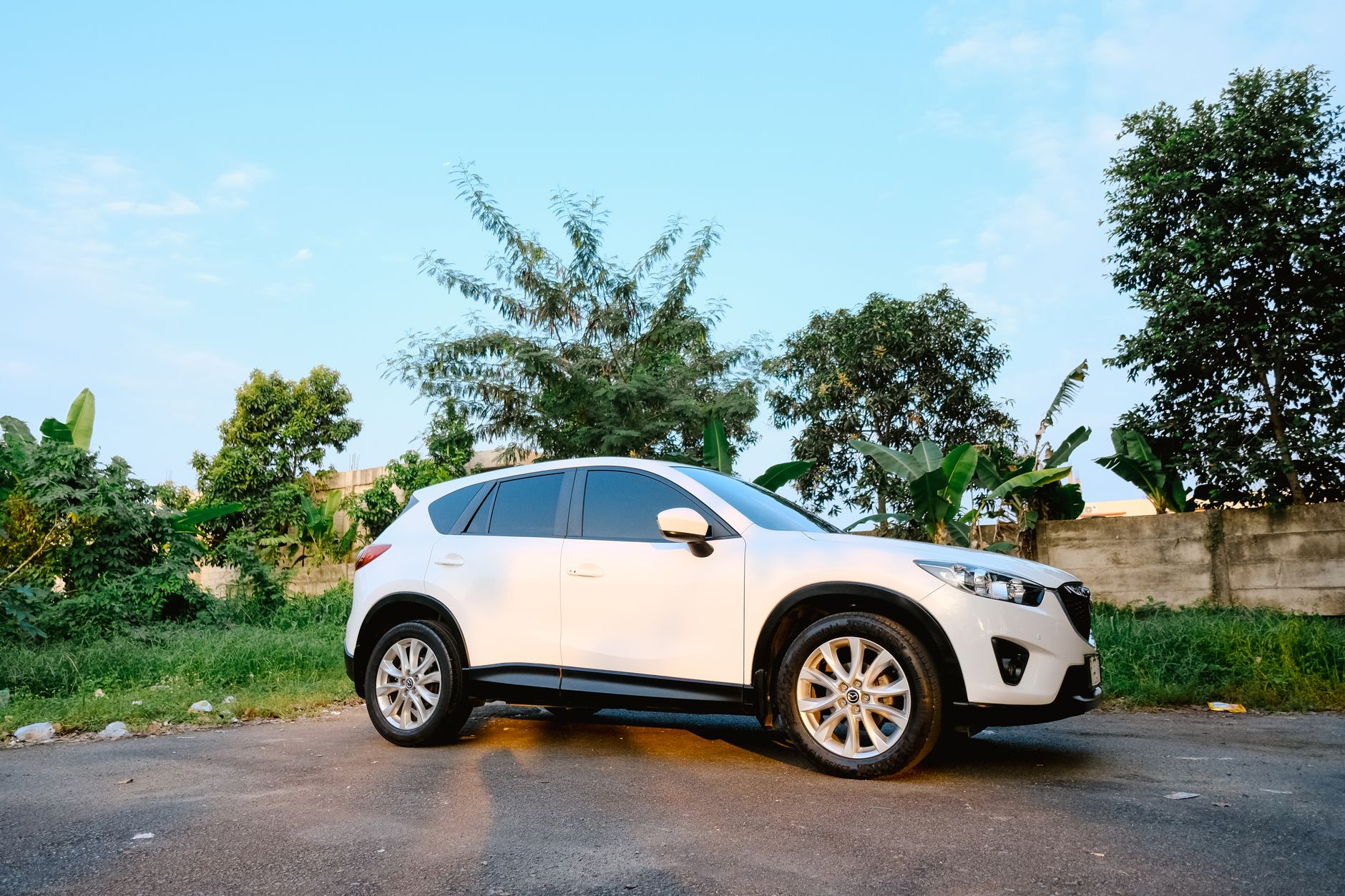
SUV · AWD
Mazda CX-5 vs Toyota RAV4 2019. used under $25k
SUV · Used cars
Kia Sportage vs Mazda CX-5 used. which to buy?
SUV · Used cars